
“An idiom is a phrase or expression whose meaning cannot be understood from the literal definition of its individual words. It is a figurative saying peculiar to a specific culture or language, where the group of words has a generally understood meaning different from the literal interpretation“
Body Parts
Cold feet: Being nervous or reconsidering a decision. Its modern usage meaning “lack of courage” appeared in American fiction in the late 19th century. One theory suggests it comes from gamblers who would claim to have “cold feet” as an excuse to leave a poker game before they lost any more money. An older Italian “Lombard proverb” also linked cold feet to being out of money.
Pulling someone’s leg: Joking with someone or teasing them.
Pulling the wool over someone’s eyes: means to intentionally deceive, trick, or mislead someone to prevent them from discovering the truth. It implies manipulating someone by hiding facts, often for personal gain. It is an informal idiom often used to describe someone being foolish or tricked
A chip on your shoulder: Holding a grudge or being easily angered.
Get off my back: Stop bothering or pressuring someone.
Bite off more than you can chew: Taking on a task that is too difficult. This idiom emerged in 19th-century America and refers to the practice of chewing tobacco. People would offer others a “plug” of tobacco, and greedy individuals might take a bite so large they couldn’t handle it comfortably or would even get sick.
Break a leg: A way to wish someone “good luck,” usually before a performance. This theatrical well-wishing began in the 1920s. Because theater folk are notoriously superstitious and believe wishing “good luck” actually causes bad luck, they wish for the opposite. Some suggest it refers to “breaking the leg line” (entering the stage past the side curtains, known as “legs”) or bending the knee in a deep bow after a successful show.
Cost an arm and a leg: Something that is excessively expensive.
Living hand to mouth: Having only enough money to satisfy immediate needs without any savings.
In over my head: to be involved in a difficult situation that you cannot get out of
By the skin of your teeth: To barely succeed at something or to narrowly avoid disaster.
Don’t throw the baby out with the bathwater: is an idiom advising against losing valuable things while trying to eliminate unwanted ones. It means avoiding overreactions that discard good aspects along with the bad. Common examples include quitting a job over one minor issue or scrapping a whole project due to small errors
Animals
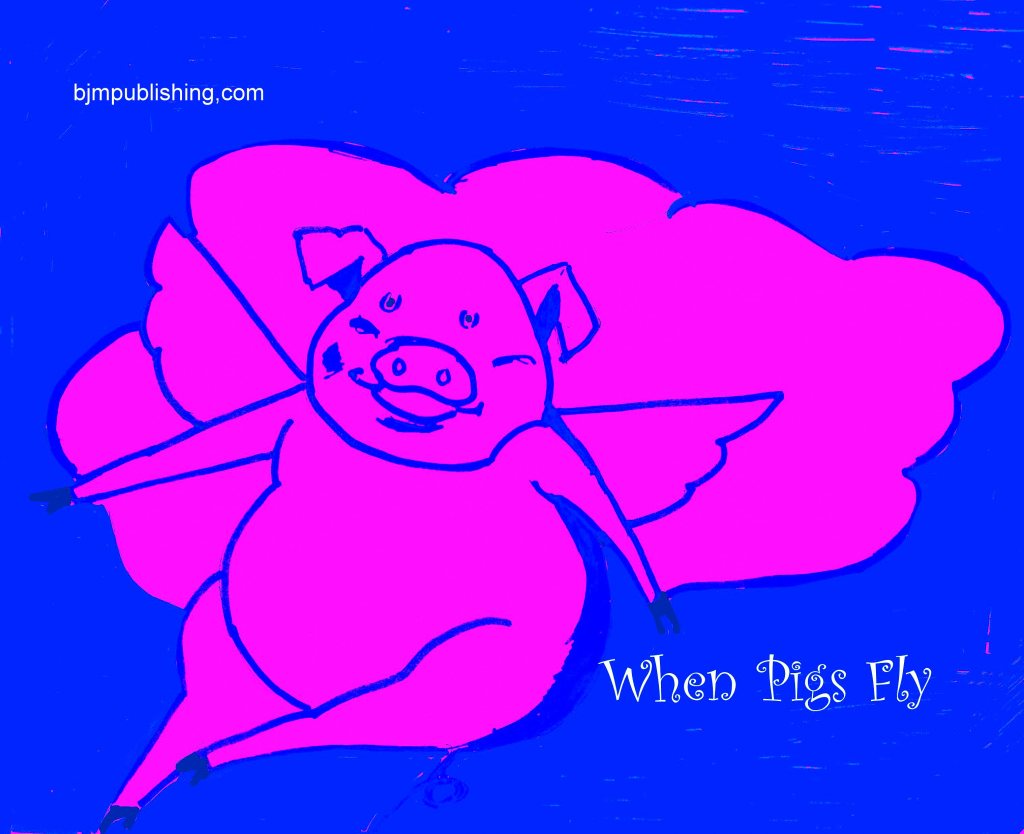
When pigs fly: Something that is impossible or will never happen.
Bring home the bacon: To earn a living or provide financial support for a family. Its origin likely stems from 16th-century country fairs where people competed to catch a greased pig; the winner literally “brought home the bacon”.
Raining cats and dogs: Raining very heavily. While there are many theories, one of the most common involves 17th-century street drainage. During heavy storms, debris and unfortunately drowned animals would be washed through the streets, making it look as though they had fallen with the rain.
Like a blue-arsed fly: Running around frantically or being very busy (common in UK/Australia).
Like a chicken with its head cut off: Acting in a frantic, disorganized, or senseless manner. Similar to above.
The elephant in the room: A major problem or controversial issue that is present but everyone is ignoring.
Let the cat out of the bag: To accidentally or prematurely reveal a secret. This phrase likely traces back to a medieval market scam. Merchants would sell what they claimed were valuable piglets in sacks (known as a “poke” – buying a pig in a poke). If the buyer was suspicious and opened the bag, they might find a worthless stray cat instead—thus “letting the cat out of the bag” and revealing the secret.
A man on a galloping horse wouldn’t notice: Used when a small mistake is insignificant and won’t be seen by someone passing by quickly.
Get off your high horse: It is used to tell someone to stop judging others or behaving as if they are better or more important. The phrase originated from medieval times when high-ranking people rode very large horses.
Miscellaneous
Hit the nail on the head: To describe exactly what is causing a situation or to be precisely correct. This phrase has been around for centuries, appearing as early as the 15th century. It is a simple metaphor for accuracy and skill—a carpenter who hits a nail perfectly on its head is doing the job exactly right
Piece of cake: Something that is very easy to do.
Break the bank: To be extremely expensive or to spend all of one’s money on a single purchase.
Born with a silver spoon in your mouth: Born into a wealthy and privileged family.
In the red / In the black: These terms come from traditional bookkeeping, where accountants used red ink to show losses (debt) and black ink to show profits.
Time is money: An expression used to emphasize that time is a valuable resource and should not be wasted.
and on that note, I think I will call it a day: to stop working or end an activity for the time being……
 REFLECTIONS OF A SWAMPER
are you getting any comments
LikeLike