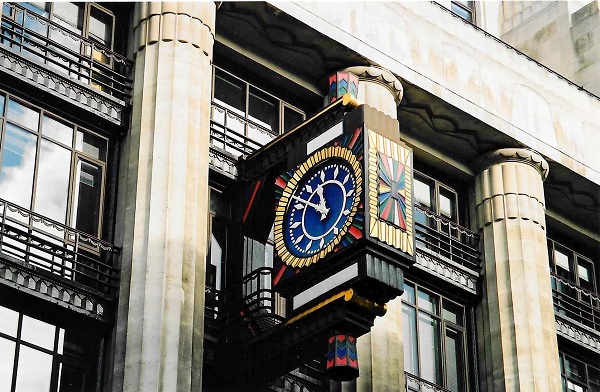
The former Daily Telegraph Building (also known as Peterborough Court or Peterborough House) was located at 135–141 Fleet Street. It features a prominent, ornate Art Deco/Art Nouveau style public clock projecting over Fleet Street. The iconic, jewel-toned clock is highly celebrated for its bright blue and gold face decorated with geometric sunburst patterns.
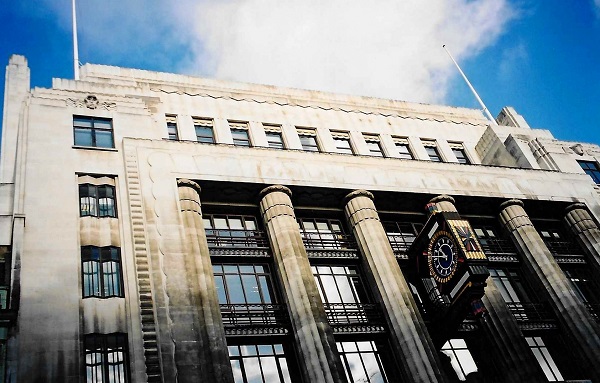
The Portland stone facade is heavily framed by massive, stylized fluted columns (pillars) with stepped capitals. The building’s monumental facade stretches across the upper storeys; giving the structure its powerful, temple-like presence on the street.
Daily Telegraph
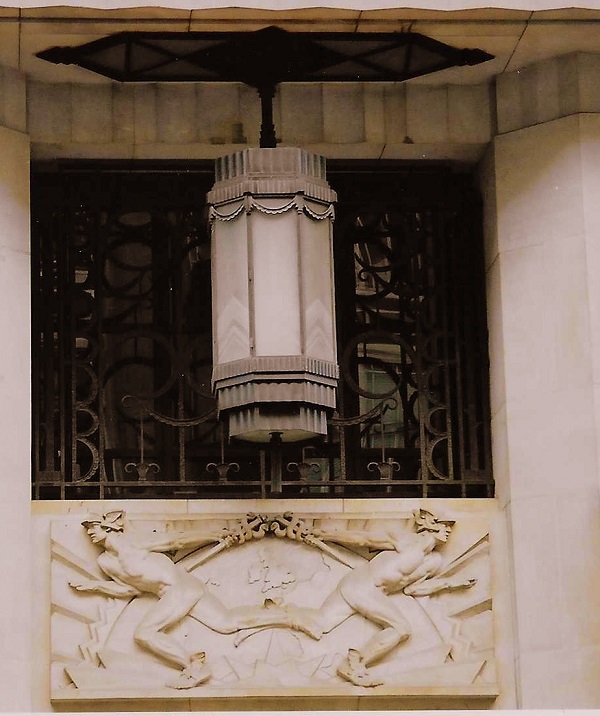
Directly above the main metalwork entrance doors sits a beautiful bas-relief panel carved by Alfred James Oakley depicting two stylized, wing-footed figures of Mercury (the Roman god of communication and messages) back to back and flying over a stylized globe – symbolizing the global transmission of news (Fitting for a newspaper company.)
Designed by architect Charles Ernest Elcock in consultation with Thomas S. Tait, the Daily Telegraph building was constructed between 1927 and 1928. It represents monumental Art Deco blended with Neo-Egyptian and Greco-Roman revival motifs. with top-floor winged mask sculptures (The Past and The Future) by Samuel Rabin, and an entryway bas-relief depicting the winged god Mercury by Alfred James Oakley. Served as the long-time headquarters for The Daily Telegraph from 1928-1980. The building was also referred to as Peterborough Court, referencing the medieval residence of the Bishop of Peterborough on Fleet Street. After the newspaper migrated away, the building was adapted as the European headquarters for Goldman Sachs.
Underwent a major multi-million-pound restoration and structural refurbishment through January 2023 to 2025 to modernize the interior spaces. Nearly 300,000 square feet of former investment banking space were remodeled into Grade A commercial office space, multi-functional courtyards, and ground-floor retail/restaurants. Designed as a green refit, retaining existing structural elements while converting the building into a 100% all-electric, low-carbon facility.
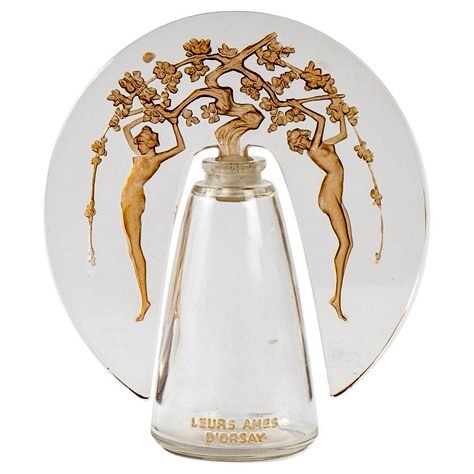
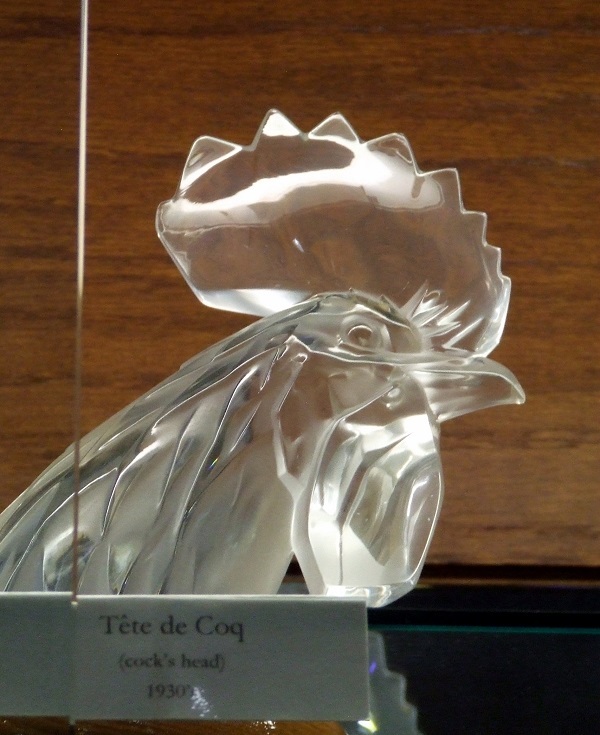
The Lalique company was founded by René Lalique – a leading figure of the Art Nouveau movement. He designed jewels, perfume bottles and art objects with curved lines inspired by flora, fauna and feminine figures, using original materials like horn, coloured glass or semi-precious stones.
In 1907, perfumer François Coty commissioned Lalique to design elegant labels and bottles. This sparked a permanent shift in Lalique’s career from unique, handmade jewelry to high-quality, mass-produced glasswork. He revolutionized the perfume industry by making beautiful packaging affordable to the public.
By the time the Art Deco movement peaked at the 1925 Paris Exposition, Lalique was famous for his molded, opalescent glass. His studio produced everything from luxury vases to monumental glass fountains and the dining saloon doors for the ocean liner SS Normandie.
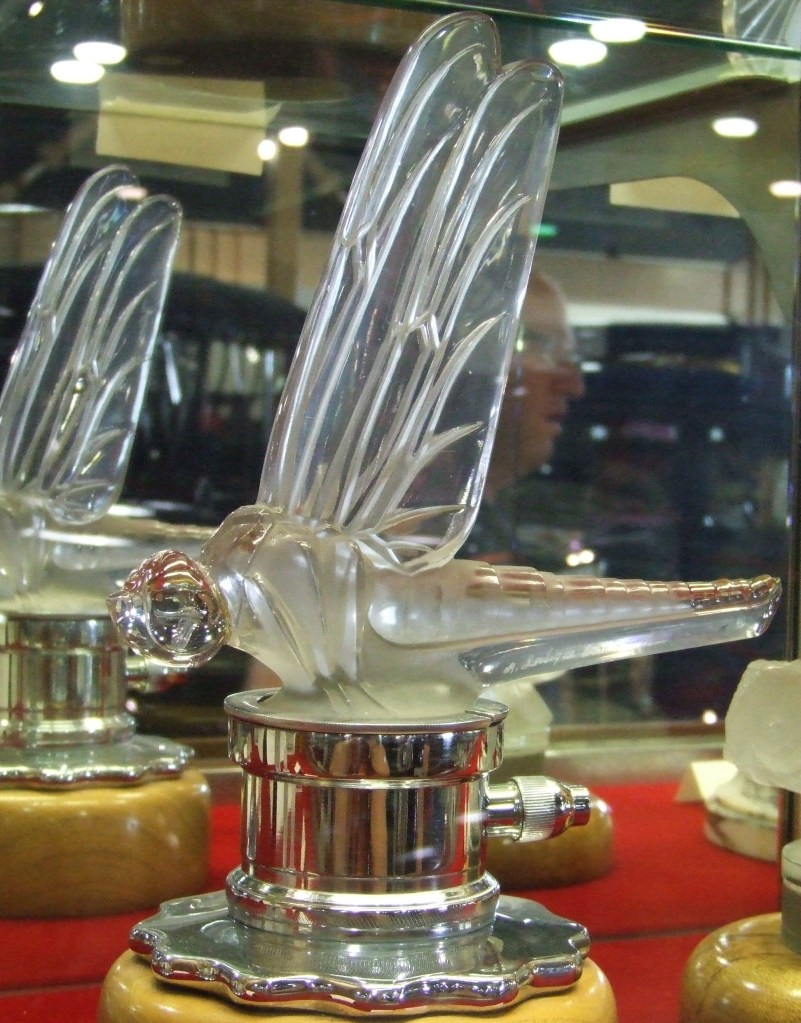
Between 1925 and 1931, René Lalique created a famous series of 29 or 30 molded glass hood ornaments intended to adorn the radiator caps of luxury Art Deco automobiles (such as Packards, Bugattis, and Bentleys). They were illuminated from below by small colored bulbs wired into the car’s electric system. He successfully bridged the gap between fine art and industrial manufacturing, creating a luxury glass brand that still operates today.
Grande Libellule by Rene Lalique
Built in 1920 by legendary glassmaker and jeweler René Lalique, the Villa René Lalique in Wingen-sur-Moder, France, was transformed by CEO Silvio Denz into an ultra-sophisticated 5-star hotel and 2-Michelin-starred gourmet restaurant that opened in 2015. The mansion underwent a multimillion-dollar, five-year restoration that focused on preserving its historic architecture while integrating Lalique’s artistic vision. Key features, such as grand fireplaces, have been preserved and enhanced with contemporary glass sculptures.
Just a few minutes drive away is the Lalique museum opened in 2011 close to the site of Lalique’s workshop in Wingen-sur-Moder. Lalique has been owned by Lalique Group SA (formerly known as Art & Fragrance SA), a Swiss luxury goods company, since 2008.
Note: On Sunday, July 5th, 2026 three masked thieves broke into the Musee Lalique at approximately 5:30 am wielding sledgehammers and for about 11 minutes smashed six display cases and stole around 20-27 crystal and jewelry pieces valued at roughly €4.5 million (approx. 5 million US.). The Lalique burglary comes just eight months after the spectacular theft of the Crown Jewels from the Louvre and in the wake of a series of similar violent crimes targeting jewels and gold in French museums.
The Royal Ontario Museum (ROM) at 100 Queens Park, Toronto, ON built Canada’s largest public collection of René Lalique glass primarily through a combination of retail history and private donations.
Following the 1925 Paris Exposition Internationale des Arts Décoratifs, major Canadian department stores—most notably the T. Eaton Company—began directly importing and heavily marketing Lalique’s molded Art Deco glass in their catalog sales and model rooms.
Because Lalique’s luxury items became popular accent pieces among wealthy 20th-century Canadian families, many private collectors over the decades eventually bequeathed their holdings and personal estates to the museum.
The ROM intentionally expanded this area of their European Decorative Arts collection to document how French Modernist designs transitioned from luxury creations into everyday Canadian consumer culture.
The ROM has showcased these pieces extensively in dedicated, major exhibitions over the years: “Déco Lalique: Creator to Consumer” (2006): A landmark featured exhibition and published catalog by curator Carolyn Hatch that highlighted the history of Lalique glass in Canada. These glass mascots—featuring famous Lalique designs like sweeping female profiles (Victoire or Spirit of the Wind), roosters, and stylized animal figures—were prominently highlighted in the ROM’s landmark Déco Lalique: Creator to Consumer exhibition. “The Art of Collecting” (2011): Featured a curated selection of Lalique glass alongside landmark European modernists like Peter Behrens, Carlo Scarpa, and Dale Chihuly.
The ROM does not release public market appraisals for its specific permanent collection items for insurance and security reasons. However, given that the ROM holds dozens of individual pieces—ranging from perfume bottles to large demi-crystal chandeliers—the institutional value of the collection as a whole is easily in the hundreds of thousands to low millions of dollars, with immense added historical and cultural value.
The collection is not on full permanent display. Like most major museums, the ROM rotates its vast decorative arts inventory, keeping the majority of its Lalique holdings protected in deep storage archives. At any given time, only a few select pieces (often iconic demi-crystal chandeliers or molded glass vases) are out on display in the Level 3 European Decorative Arts galleries or temporary design showcases.
Note: This may be prudent considering the thefts in France this past year.
Romain de Tirtoff was born on November 23, 1892 in Saint Petersburg, Russia to an aristocratic family. He was a pioneering Russian-born French artist and designer known as the “Father of Art Deco”. His designs included dresses and accessories for women; costumes and opulent sets for opera, ballet, and dramatic productions; and posters and prints. Moved to Paris, France, in 1912 against his family’s wishes to pursue art. Adopted the pseudonym Erté, which is the French pronunciation of his initials R.T. (Romain de Tirtoff).
He joins the ranks of the elite who are known worldwide by their first names, such as Cher, Madonna, Twiggy, Elvis, Bono, Adele, etc. Erté designed over 240 covers and thousands of illustrations with Harper’s Bazaar over 22 years starting in 1915. (A collection of Harper’s Bazaar illustrations was published in Designs by Erté [1976] with text by Stella Blum.) He also crafted extravagant costumes and stage sets for the Folies Bergère in Paris, Ziegfeld Follies in New York, and Hollywood films. This is the stage of his career that entrances me the most. His costumes were exceptionally brilliant and unique. He worked in many fields, including jewelry, sculpture, and interior decor. He worked for nearly eight decades and died in Paris, France in 1990 at 97 years of age of kidney failure.
He wrote his autobiography, Things I Remember in 1975. Erté’s legacy serves as a reminder of the intersection between art and society, illustrating how a singular artistic voice can resonate across generations and shape cultural narratives. The name remains a symbol of elegance and aesthetic excellence, firmly rooted in the annals of art history.
The only thing I have seen that comes close to the theatricality of Erte is in some of the wearable float costumes of Toronto’s Caribana festival. If you have the opportunity, you should try to get to spend the week-end at the Parade, a tad pricey for a hotel room during that time but the amount of colour, tinsel, sparkles, feathers, skin, and dancing is incredible. A cornucopia of visual delight or a photographer’s idea of heaven!
Some cars are just on another level—so exotic and impressive that they make everything else look ordinary. Most countries are lucky to have even one “legend” to their name. You’ve got the American Duesenberg SJ, Britain’s 12-cylinder Rolls-Royce Phantom III, Germany’s supercharged Mercedes SSKL, and France’s massive Bugatti Royale. But then there’s Hispano-Suiza. These cars were in a league of their own. No expenses were spared on their creation ensuring they were the best ever built.
The brand started back in 1901 when a Swiss engineer named Marc Birkigt convinced his Spanish boss, Emilio La Cuadra, to pivot from electric buses to motor cars. The name “Hispano-Suiza” literally means Spanish-Swiss, a nod to the Spanish money and Swiss engineering behind it.
During the 1920’s and ‘30s the company produced the vehicles that established its reputation among the elite of the world’s great motor cars. The H6, which debuted at the 1919 Paris Motor Show is still considered one of the greatest cars ever made.
When the Great Depression hit in the ’30s, most luxury carmakers panicked as their pool of wealthy buyers dried up. But Hispano-Suiza doubled down, refusing to compromise on their huge, powerful, over-the-top designs. While they eventually stopped production in France by 1938, they kept things going in Barcelona until World War II began.
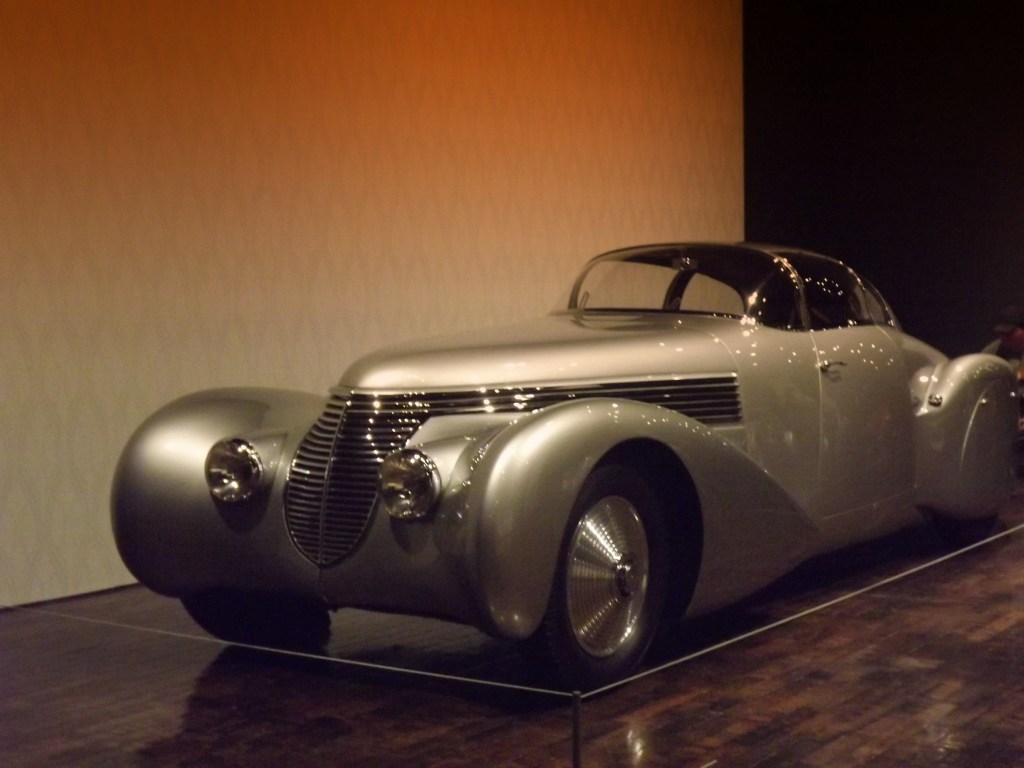
One of the coolest stories from this era involves André Dubonnet, a wealthy heir to the aperitif fortune and race car driver. He commissioned the 1938 “Xenia”—named after his late wife—which is basically the peak of pre-war Art Deco design. It’s a sleek, curvy, one-of-a-kind masterpiece that looks like it’s from another planet. He won a sports car race at Boulogne with it in 1921.
In the end, Hispano-Suiza was a perfect mix of world-class engineering and pure style. Marc Birkigt eventually retired in 1950, and in a fitting twist, the French side of his company ended up merging with Bugatti.
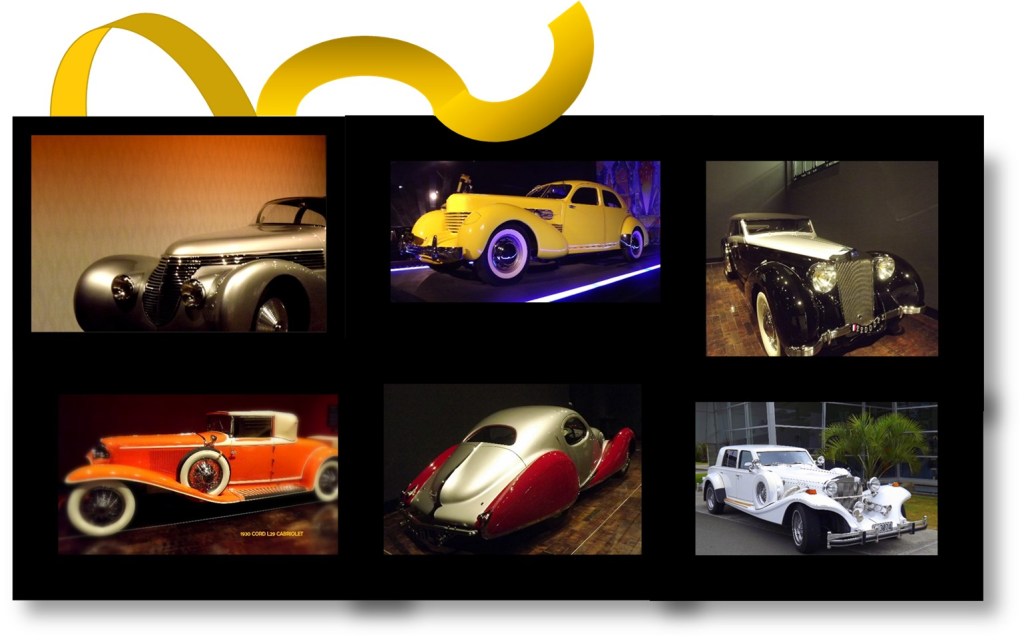
Can you guess the other luxury cars in the above collage? Which is a kit car?
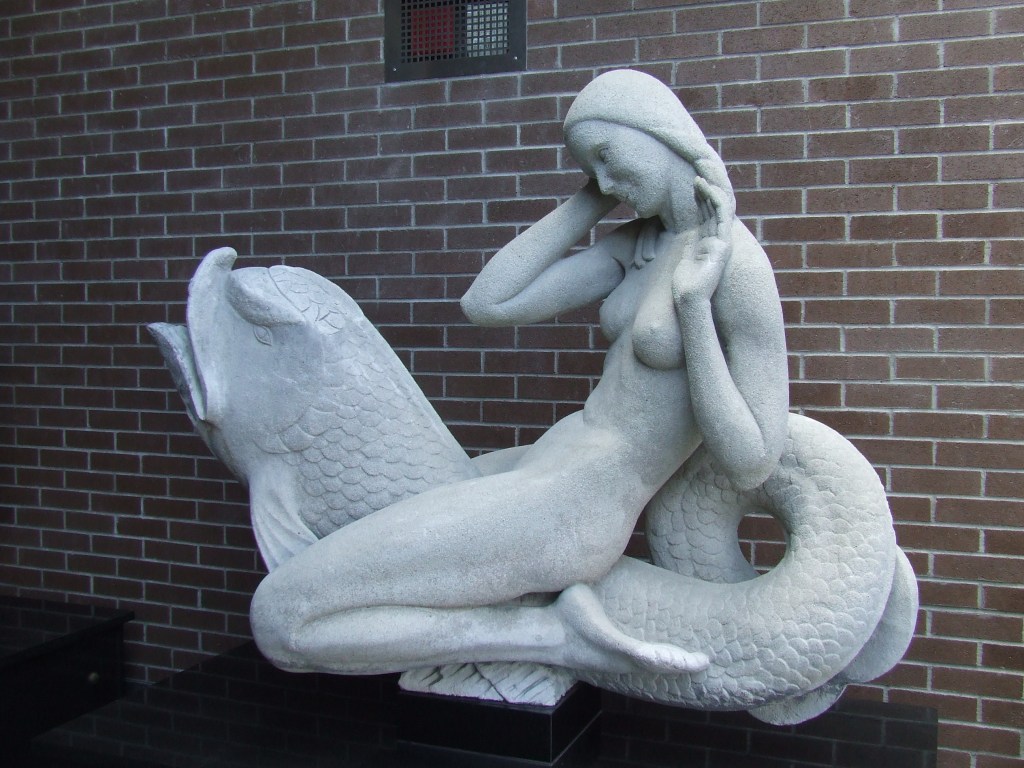
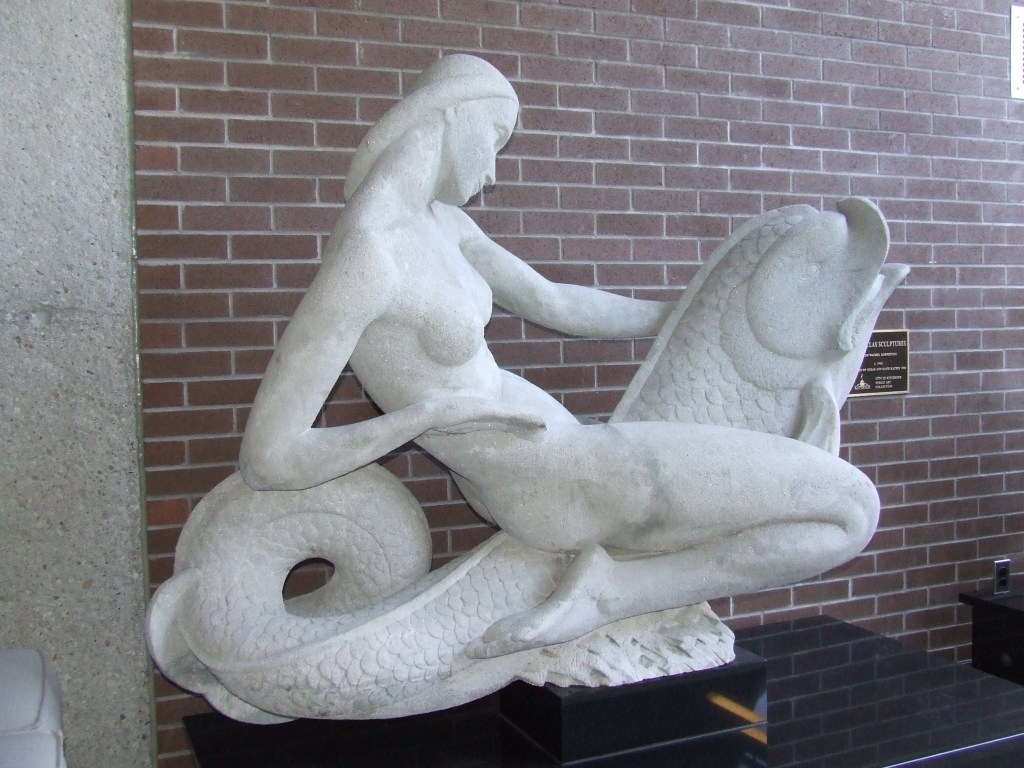
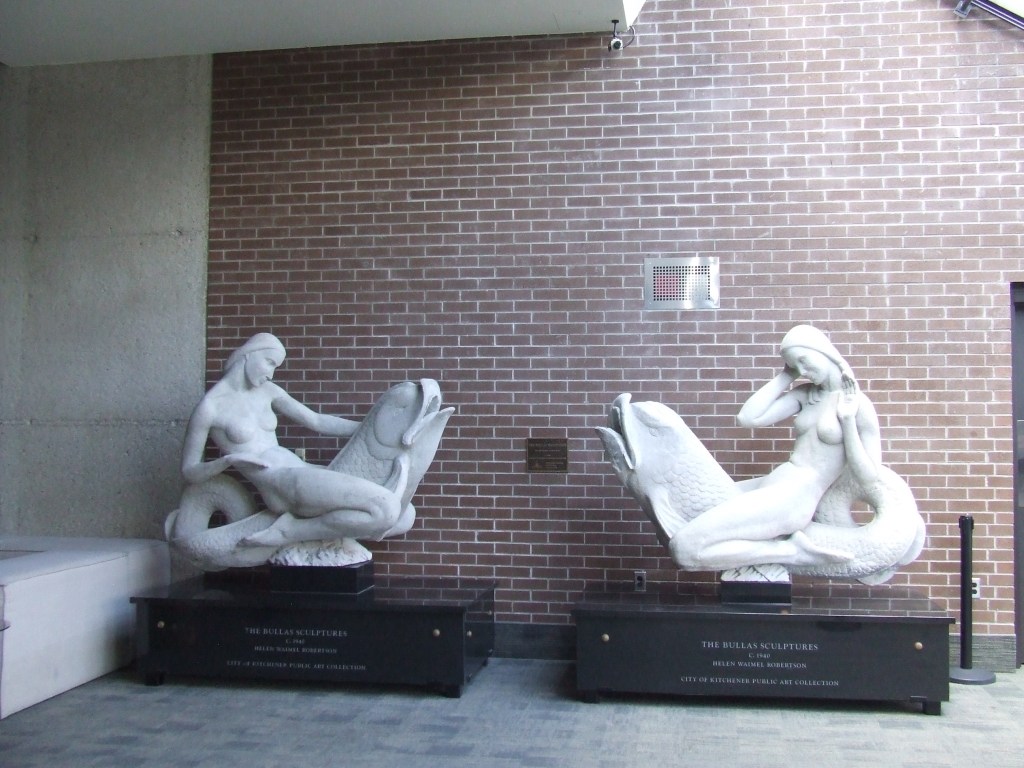
Gather ’round, everyone! Lean in, because I’ve got a tale for you about two of Kitchener’s most famous “ladies” who spent decades looking for a permanent home.
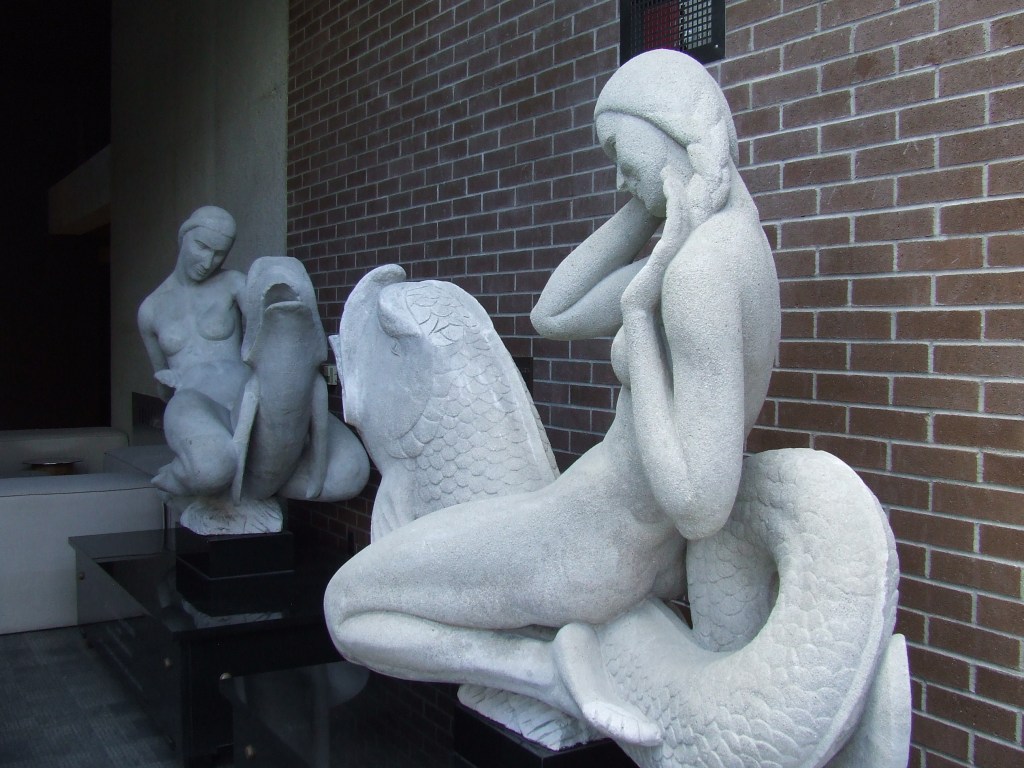
Imagine it’s 1940. A local artist named Helen Waimel Robertson—who was a total rock star in the sculpture world—decides to create something a bit “extra” for the era. She crafts these two stunning Art Deco statues. They aren’t just any statues, though; they’re sea goddesses, or Nereids*, elegantly hitching a ride on the backs of dolphins. *They represent the beauty and goodness of the sea.
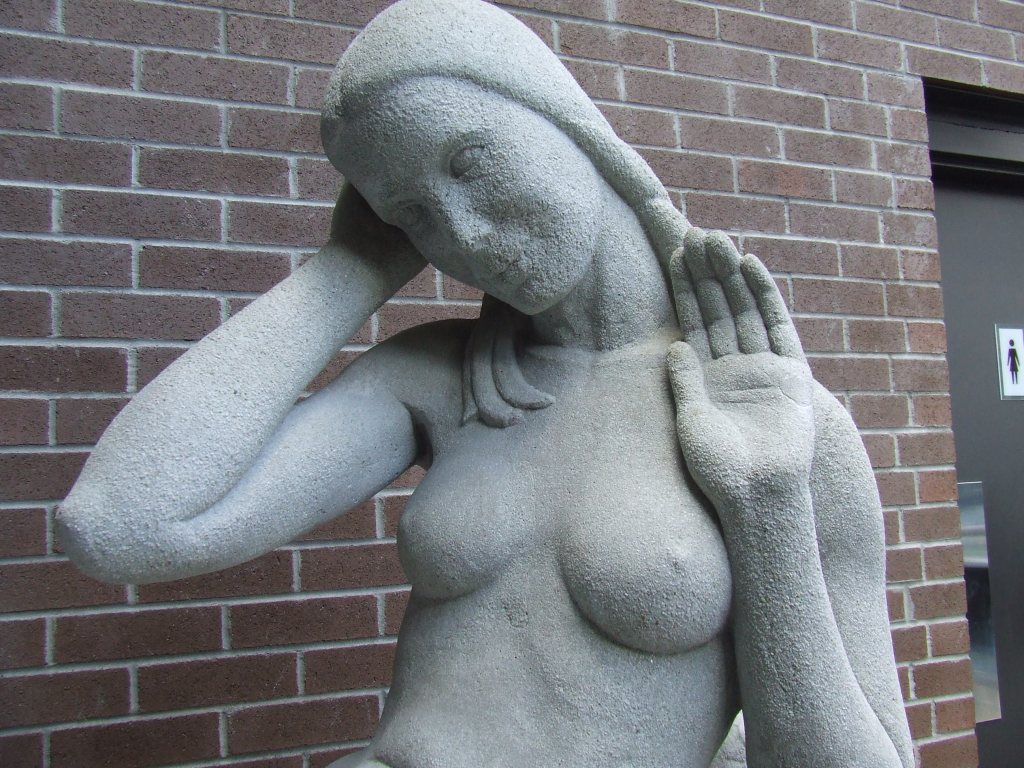
Now, here’s the cool part: Helen didn’t just use plain old cement. She mixed in quartz aggregate. So, when the sun hits them just right, they don’t just sit there—they sparkle.
But back in the 1940s, Kitchener was a pretty quiet, conservative place. When a local businessman named Roy Bullas put these “nude” sea nymphs in a fountain outside his furniture store on Charles Street, it caused quite the stir! People weren’t exactly used to seeing mythical goddesses hanging out by the sidewalk. They became a local landmark, but they definitely raised a few eyebrows.
Fast forward about forty years. The wrecking ball arrives! The Bullas store is being torn down to build the downtown bus terminal. For a minute there, it looked like our sparkling goddesses might end up in a scrap heap. Luckily, a local couple, the Kachiks, stepped in like art-world superheroes and saved them from the rubble.
After that, the statues spent a long time hiding away in city storage—basically a dark, dusty basement. It wasn’t until 1998 that they finally got their “happily ever after.” Thanks to some serious persistence from the artist’s sister, the city brought them out of retirement.
Because they’re made of that special sparkling concrete, they couldn’t stay outside forever—the Ontario winters are a bit much for even a sea goddess! So, they were moved into the “refreshment” lobby of the Centre In The Square. Today, they stand there finally dry, warm, and ready to greet everyone coming to see a show.
So, next time you’re in the theatre for a performance, look for the ladies on the dolphins. They’ve survived the 1940s critics, a demolition crew, and years in a storage locker just to sparkle for you!
Note: A sculpture is a three-dimensional work of art. It can be made of stone, metal, clay, or other materials. A statue is an artwork that depicts a person or an animal or part of a person or animal. The terms sculpture and statue are often used interchangeably.
When adventure calls
I have been lucky enough to have travelled to some of the most beautiful places on earth but there are still many places I'd like to see.