
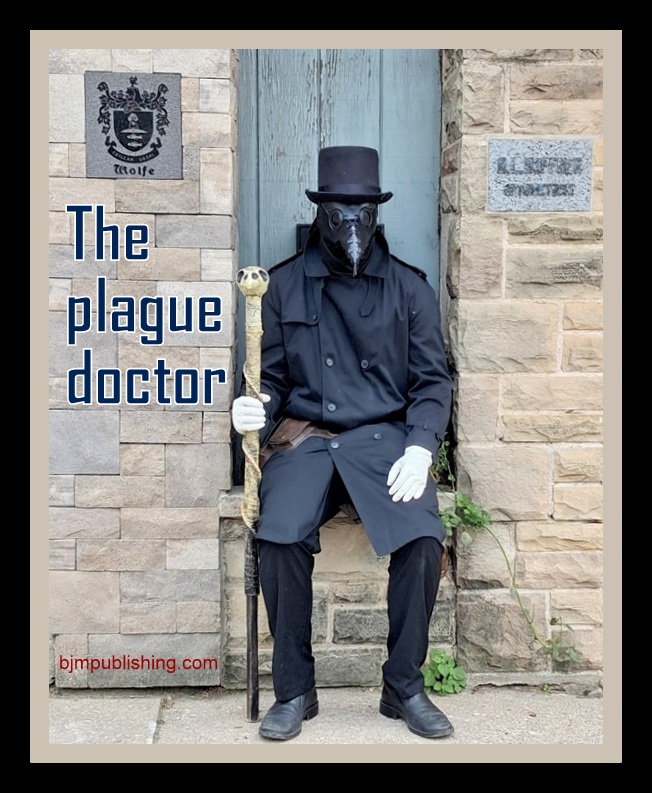
Photo above taken at the recent Cogs and Steampunk Festival in Fergus, Sept, 2026
A plague doctor was a specialized municipal physician hired by towns and cities in Europe during 17th-century plague epidemics to treat victims, especially the poor who could not pay. These physicians wore this unsettling outfit to protect themselves from the plague. It was an early version of the present-day personal protective equipment (PPE).
What They Meant and Symbolized
- Harbingers of Death: Because they usually arrived only when an outbreak began and rarely cured anyone, seeing a plague doctor meant that severe illness or death was nearby.
- Public Record Keepers: Beyond medical care, their role meant documenting the dead, counting infection numbers, witnessing wills, and performing autopsies for demographic and civic data.
- A Symbol of Fear: Over time, the terrifying medical uniform transformed into a popular Carnival of Venice character, symbolizing mystery, history, and a memento mori (a reminder of mortality).
The Iconic Costume
- The Beaked Mask: The mask featured a long bird-like beak stuffed with strong herbs, spices, and camphor. People believed disease spread through “miasma” (poisonous “bad air”), and the herbs were meant to filter or purify it.
- Protective Suit: They wore a head-to-toe heavy waxed leather or canvas robe, boots, and gloves. While designed to block bad air, it accidentally offered minor protection against bodily fluids and flea bites. The hat was worn to make people aware that they were physicians. The cloak and gloves were worn to prevent skin-on-skin contact with patients.
- The Wooden Wand: Doctors carried a cane or stick to examine and point at patients without having to touch them.
I would imagine that seeing this frightening figure morph out of a misty morning fog, even if you were near death; you’d jump up and run for cover.


Yes …I’ve seen this macabre looking outfit many times…however I didn’t realize what it represented. I’m not sure if I’d welcome him wearing that outfit into my home …to check me out with his stick and all! A great Hallowe’en costume!!! I’ve heard they discovered some cases of the plague. Wow…that’s scary! 😨OMG what next!!’ You Better Call Sal!!! 😝 We learn something new everyday!Mar🧐Sent from my iPhoneOn Oct 6, 2026,
LikeLike