
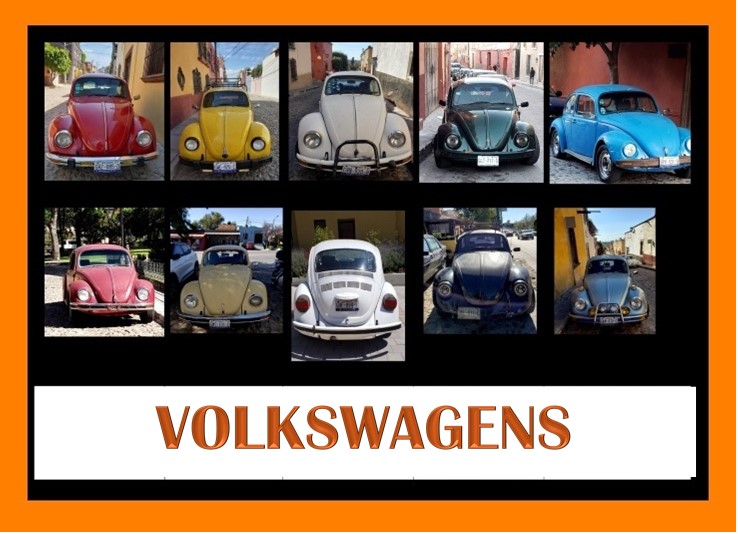
In the 1960s, Volkswagens—specifically the ‘Beetle’ and the ‘Microbus’—attained legendary status by serving as both practical transport (more miles to a gallon of gas) and powerful cultural symbols. Their popularity was driven by a combination of affordability (everyday working class and students), mechanical simplicity (easy to repair), and a revolutionary marketing campaign that resonated with a generation looking for an alternative to mainstream American consumerism. Check out “think small” campaign on youtube. https://www.youtube.com/watch?v=b8KQVjvmEGk
The car’s modest, unchanging design represented a rejection of “planned obsolescence”—the American trend of changing car styles every year to force new purchases. Young people today would know that term from the Apple and Samsung lawsuit for deliberately slowing down the performance of older models of their phones.
Many critics, consumer advocacy groups, and technology analysts consider the constant upgrading of Windows—specifically the transition from Windows 10 to Windows 11—to be a form of planned obsolescence. This perspective argues that Microsoft is employing a “design to die” approach, where functional hardware is rendered obsolete by software requirements, forcing consumers to purchase new devices.
Ecclesiastes 1:9 says, “What has been will be again, what has been done will be done again; there is nothing new under the sun.”
The Beetle and Microbus were available, cheap, and relatively reliable by the standards of the 1960s. These were solid assets for a subculture that could be short on funds. Volkswagen managed to fulfill this niche despite its less than savory origins.
In the 1930s, Adolf Hitler commissioned Ferdinand Porsche to design an affordable, reliable car for the German masses—a “Volkswagen”. It was intended to represent Nazi Germany’s engineering superiority.
The production of the Beetle relied on forced labor, including prisoners of war and victims from concentration camps, to build the factory and the vehicles. The Nazis launched a program allowing workers to save for a car by buying stamps. Thousands of Germans paid into this scheme, but when war broke out, the factory pivoted to military production, and not a single civilian customer ever received their promised car, nor were they refunded. So a product of the usual political corruption and fraud that runs rampant today.
How then did the Beetle become a symbol of fun, freedom, and rebellion?
The Volkswagen Beetle became immensely popular in the United States and Canada during the 1960s and 1970s by offering a, reliable, and affordable alternative to the large, fuel-thirsty “land yachts” produced by Detroit at the time. Its success was driven by a combination of, clever marketing, superior engineering for its price point, and its eventual adoption as a counterculture symbol partly through movies like the ‘Herbie’ series, etc.
The punch buggy game involves players spotting Volkswagen Beetles and calling out “punch buggy!” (and colour) when they see one, earning them the right to deliver a (supposedly) gentle punch to a fellow passenger’s arm. And that’s really the whole game: The first person to spot a VW Bug and call it out gets to punch someone. Simple but possibly quite bruising to one’s arm. We still play it today but since volkswagens have all but disappeared around our area, we don’t play as frequently. I have heard though that the VW beetle is supposed to be making a comeback in 2026. Fingers crossed!

