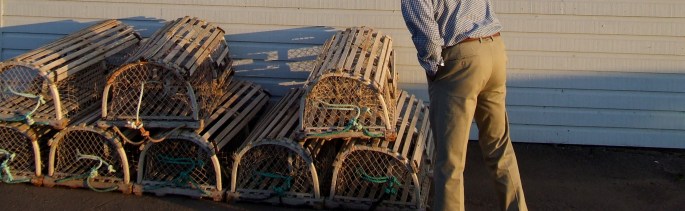
Prince Edward Island (PEI) has two distinct lobster fishing seasons: a spring season from late April/early May to late June; this is the largest harvest, accounting for about 75% of the catch, and a fall season from mid-August to mid-October. PEI splits its lobster fishing into two distinct regional seasons to protect the lobsters during vulnerable biological cycles like molting and mating.
The lobster fishery brings in tens of millions of pounds of catch annually, accounting for about 15% of Canada’s total lobster production. It provides vital jobs for over 1,200 licensed fishers and supports processing plants, local harbors, and tourism.
Nova Scotia catches the most lobsters of any province in Canada, accounting for roughly 45% to 50% of the country’s total annual catch. Additionally, the town of Shediac, New Brunswick, is widely known and promoted as the “Lobster Capital of the World” due to its rich fishing heritage and famous 90-tonne giant lobster monument.
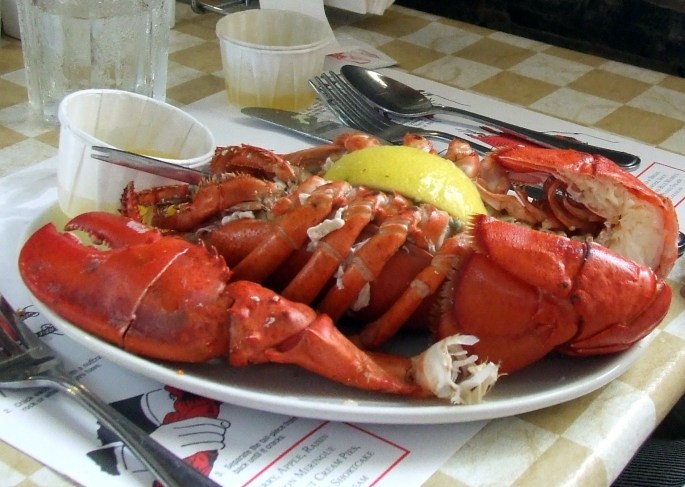
For a traditional lobster supper there are three main places to partake of succulent, mouth-watering lobster and though it may appear expensive when you think about how everything is included with the meal and the price of appetizers and desserts now, it isn’t that bad. A special occasion for sure.
Lobster supper
Supper Location
Estimated Price Range
Key Feature / Unlimited Sides
Atmosphere
New Glasgow
CAD 40–60
a short drive from the city, serving a complete multi-course lobster meal with unlimited sides of mussels, chowder, and pie.
Historic community hall
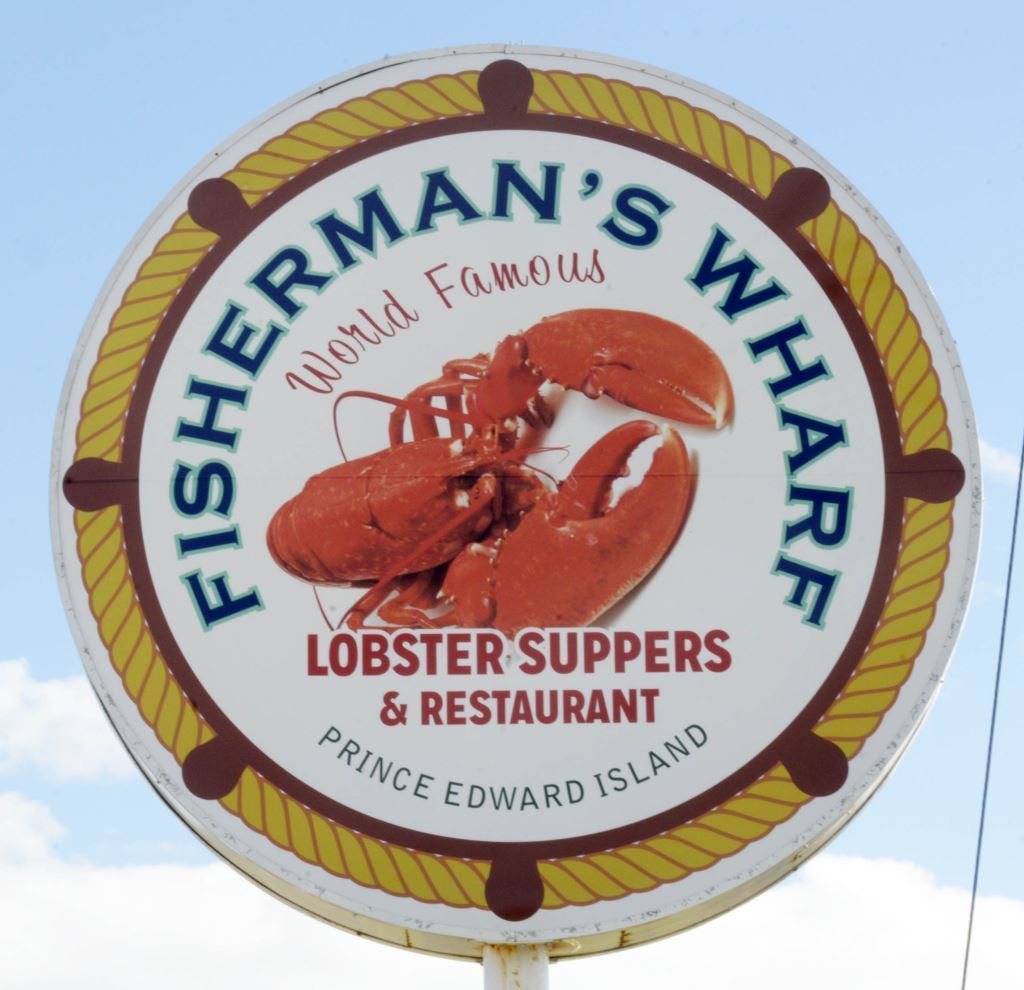
Fisherman’s Wharf
CAD 40–80
60-foot salad and dessert bar & endless mussels.
Expansive & nautical
Lobster on the Wharf
CAD 30–80
À la carte platters & fresh pound
Scenic harbor deck
You are not limited to lobster suppers, you can go down to the local pier in most towns and get live lobster to take home or cook up, and there are plenty of places to grab a lobster roll. Some of the best places on Prince Edward Island include acclaimed spots like Richard’s Fresh Seafood in Covehead and Victoria-by-the-Sea, Blue Mussel Cafe in North Rustico, the Water Prince Corner Shop in Charlottetown, the Seafood Shack, and Point Prim Chowder House and Oyster Bar. I’m sure I have left some out but that’s what exploring on vacation is all about.
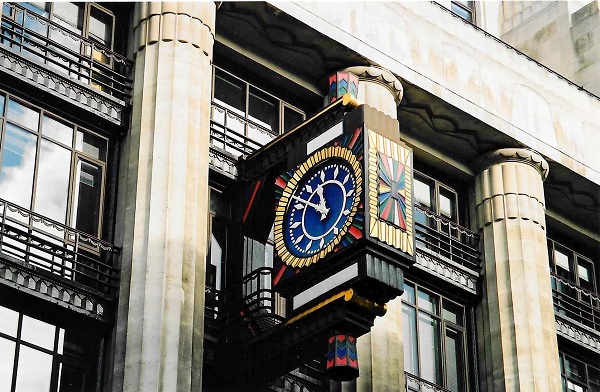
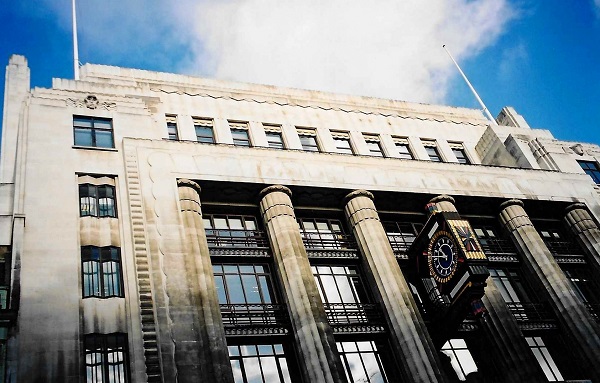
The former Daily Telegraph Building (also known as Peterborough Court or Peterborough House) was located at 135–141 Fleet Street. It features a prominent, ornate Art Deco/Art Nouveau style public clock projecting over Fleet Street. The iconic, jewel-toned clock is highly celebrated for its bright blue and gold face decorated with geometric sunburst patterns.
The Portland stone facade is heavily framed by massive, stylized fluted columns (pillars) with stepped capitals. The building’s monumental facade stretches across the upper storeys; giving the structure its powerful, temple-like presence on the street.
Daily Telegraph
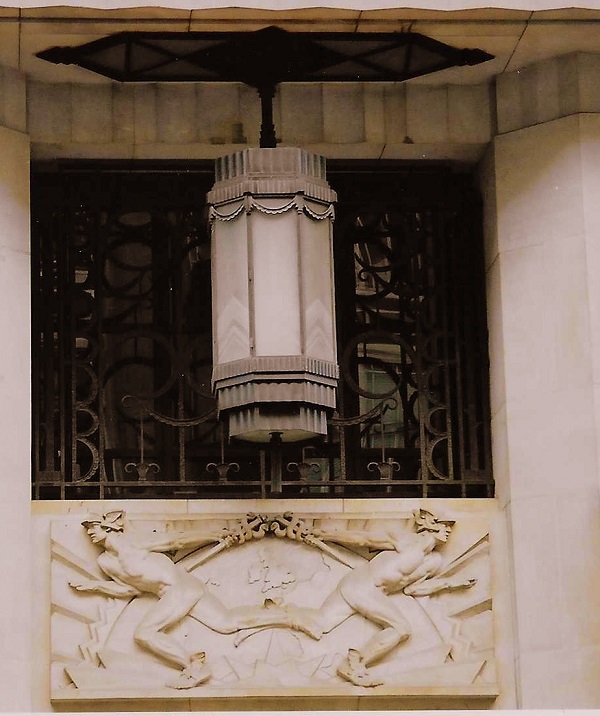
Directly above the main metalwork entrance doors sits a beautiful bas-relief panel carved by Alfred James Oakley depicting two stylized, wing-footed figures of Mercury (the Roman god of communication and messages) back to back and flying over a stylized globe – symbolizing the global transmission of news (Fitting for a newspaper company.)
Designed by architect Charles Ernest Elcock in consultation with Thomas S. Tait, the Daily Telegraph building was constructed between 1927 and 1928. It represents monumental Art Deco blended with Neo-Egyptian and Greco-Roman revival motifs. with top-floor winged mask sculptures (The Past and The Future) by Samuel Rabin, and an entryway bas-relief depicting the winged god Mercury by Alfred James Oakley. Served as the long-time headquarters for The Daily Telegraph from 1928-1980. The building was also referred to as Peterborough Court, referencing the medieval residence of the Bishop of Peterborough on Fleet Street. After the newspaper migrated away, the building was adapted as the European headquarters for Goldman Sachs.
Underwent a major multi-million-pound restoration and structural refurbishment through January 2023 to 2025 to modernize the interior spaces. Nearly 300,000 square feet of former investment banking space were remodeled into Grade A commercial office space, multi-functional courtyards, and ground-floor retail/restaurants. Designed as a green refit, retaining existing structural elements while converting the building into a 100% all-electric, low-carbon facility.
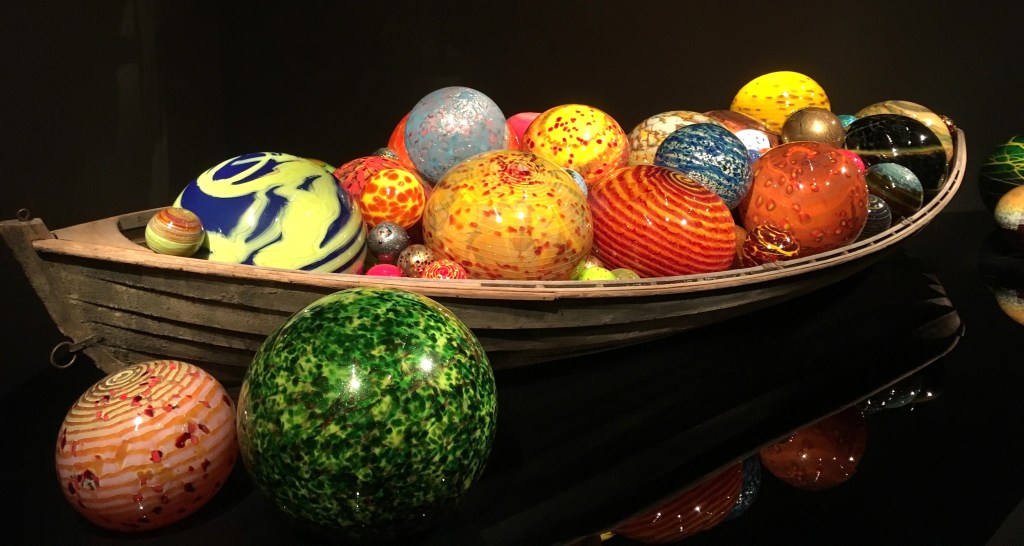
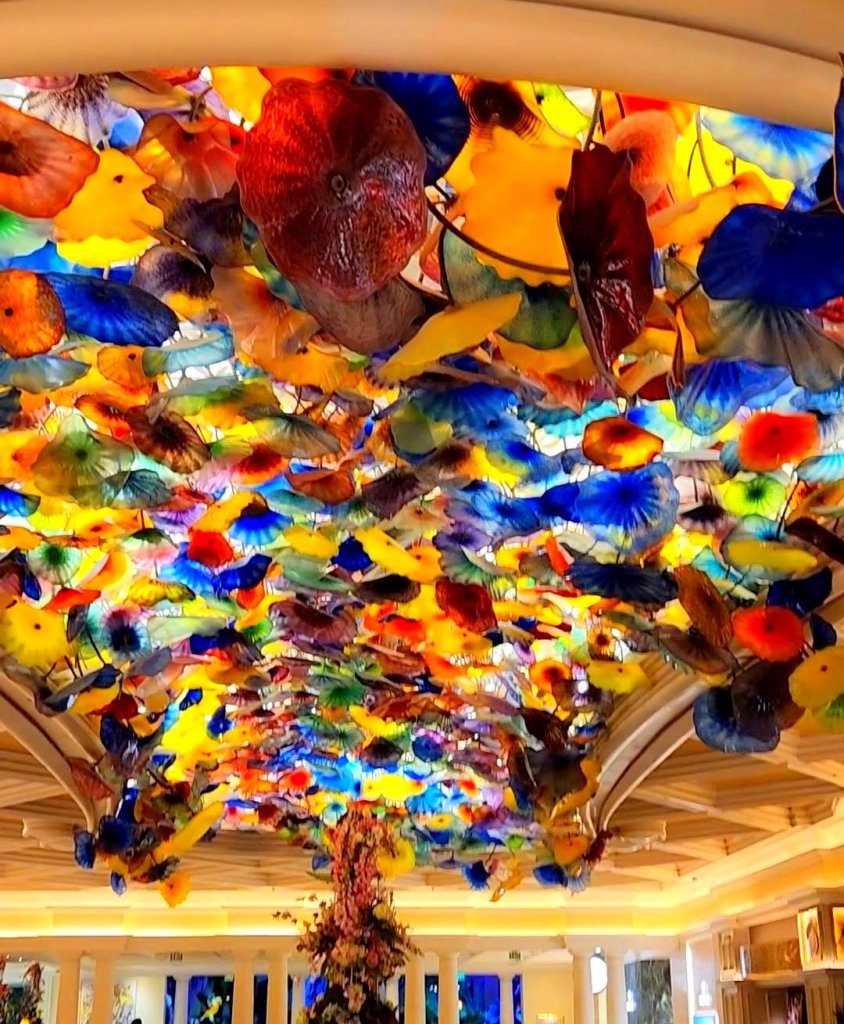
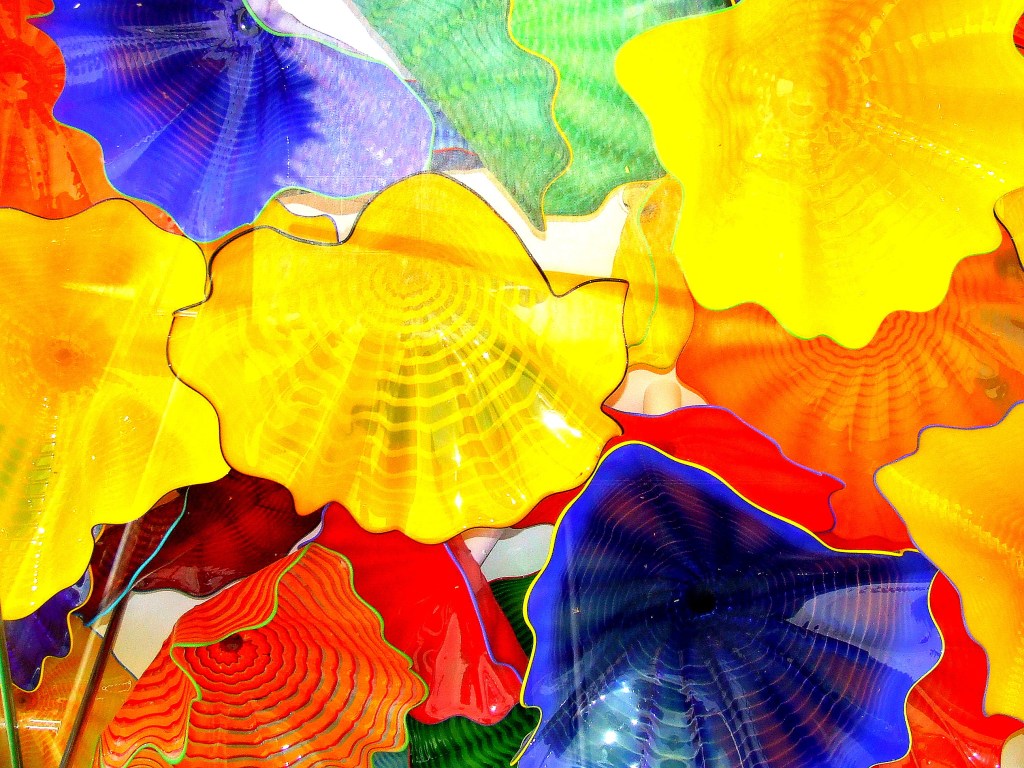
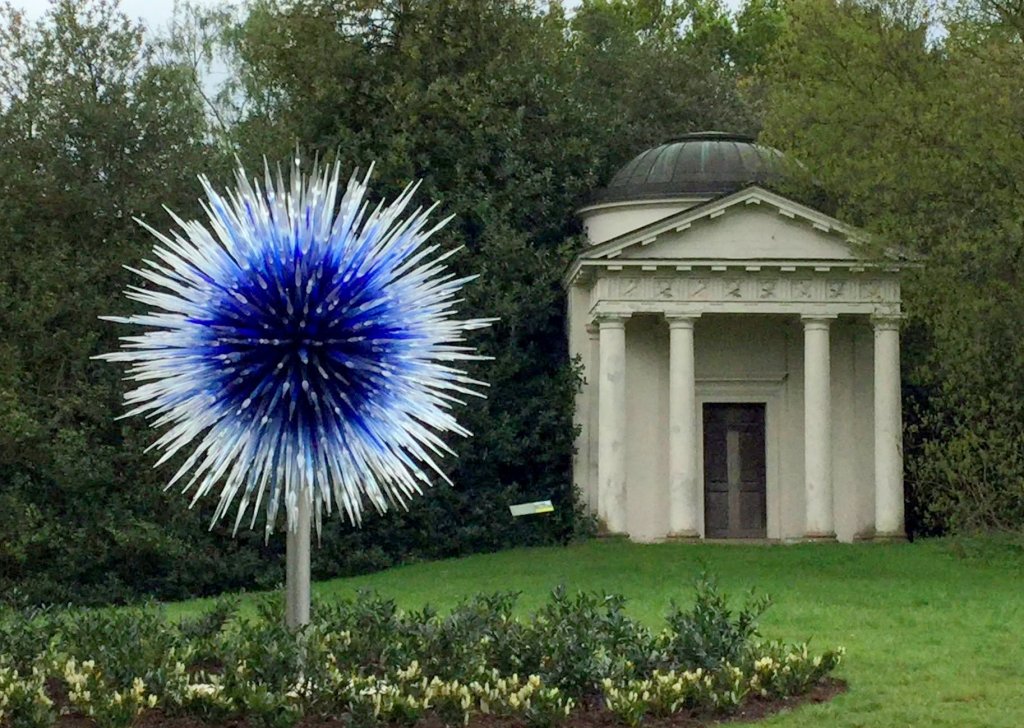
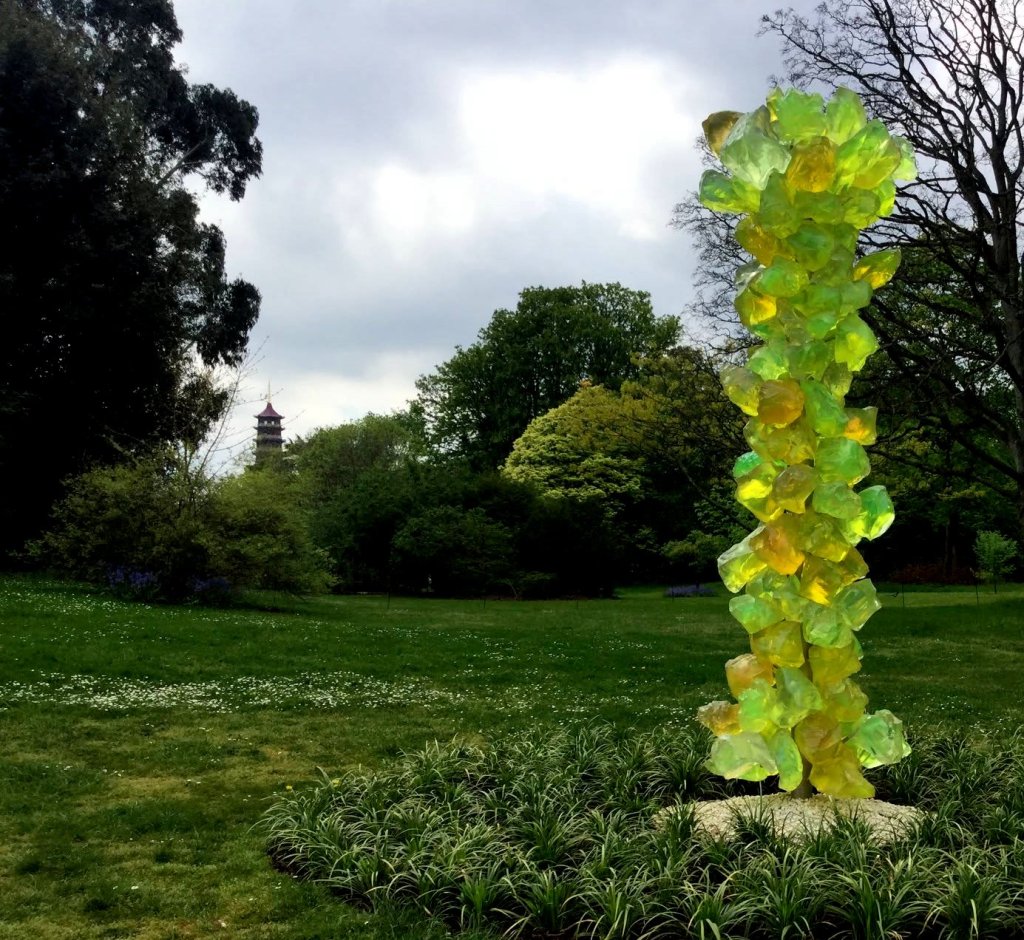
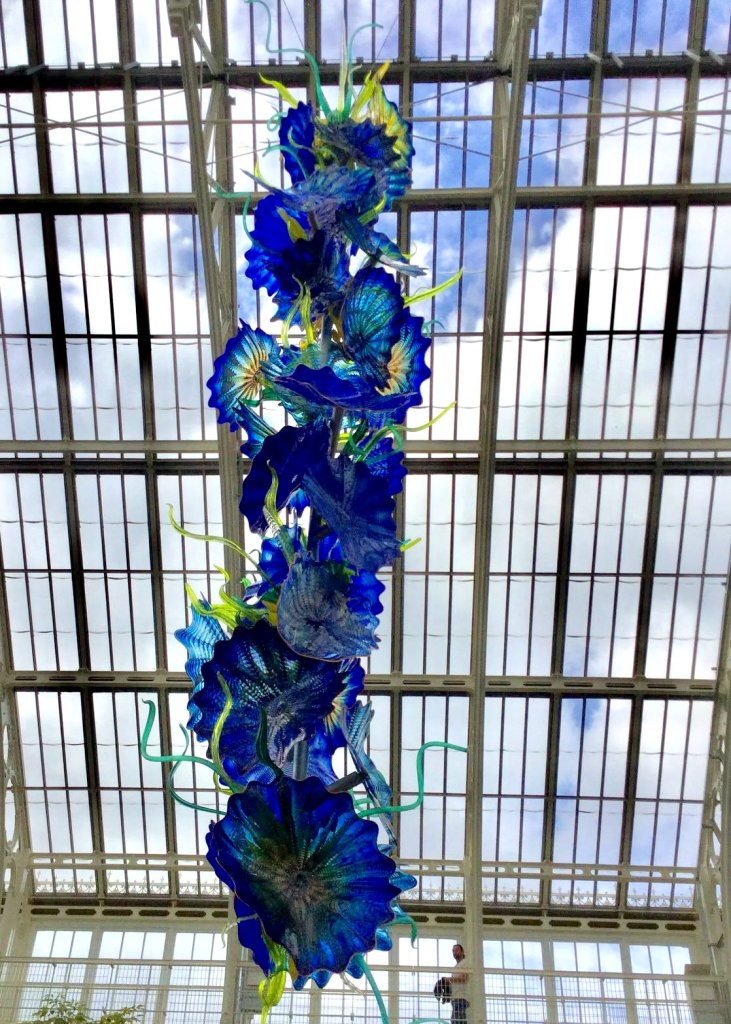
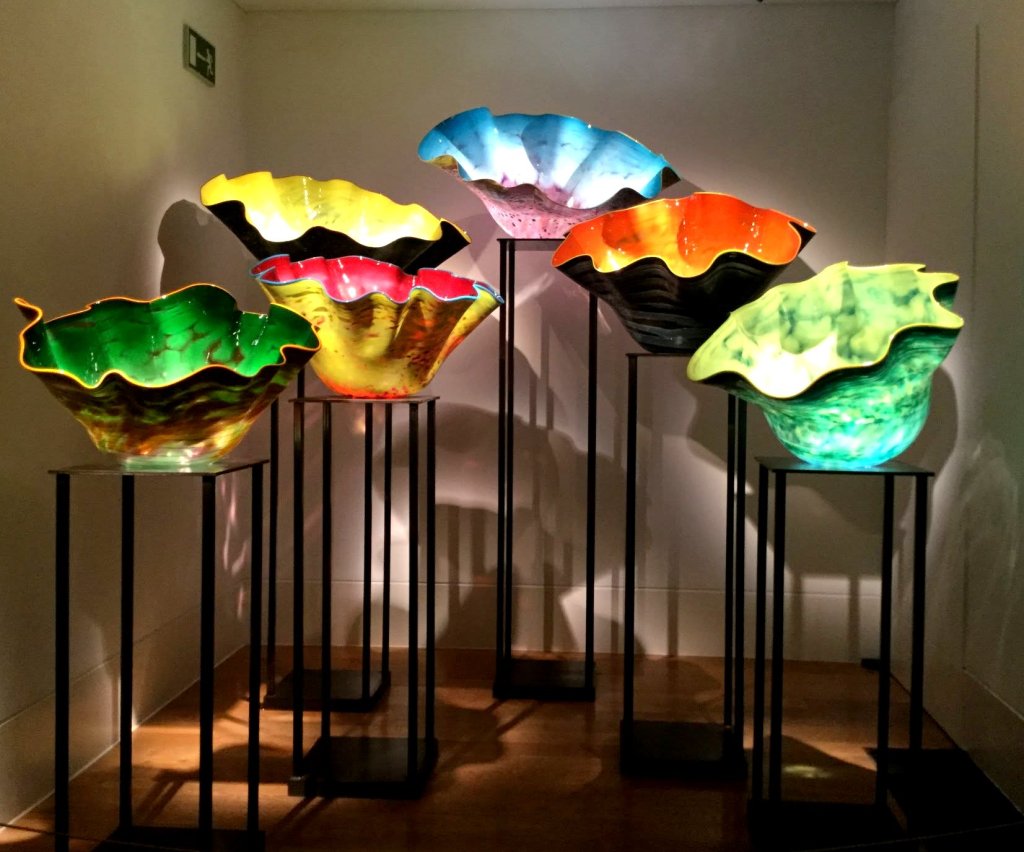
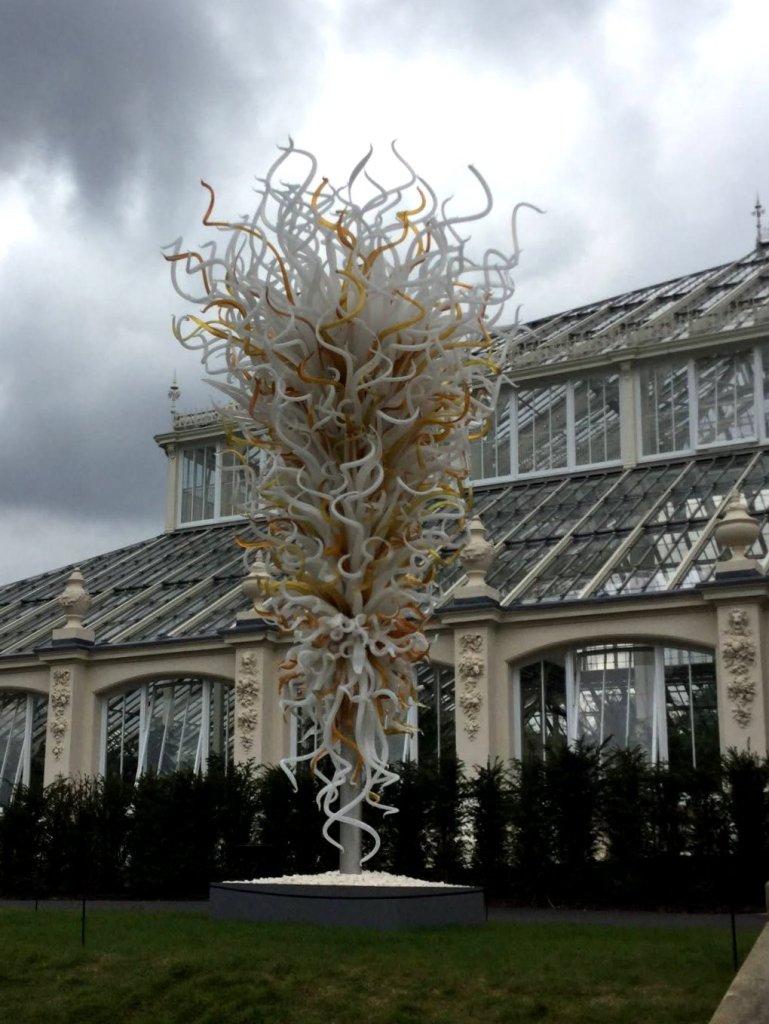
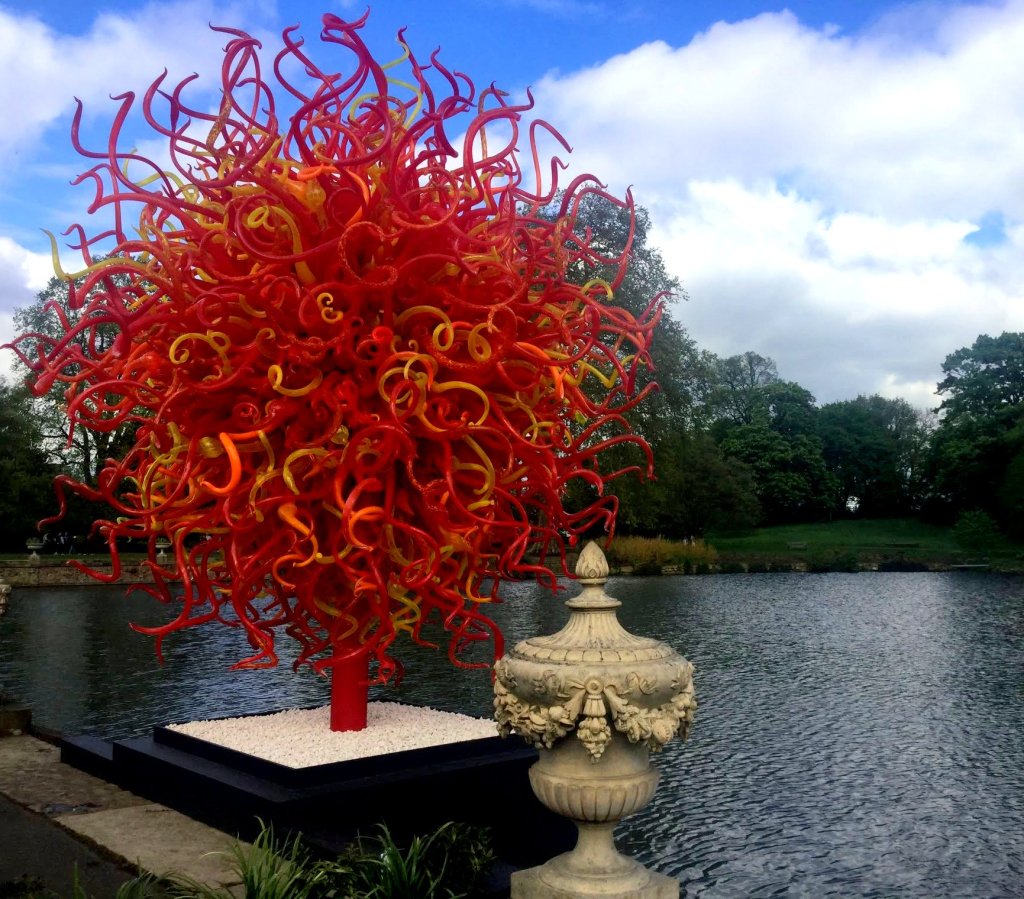
Dale Chihuly is a renowned American glass sculptor who has created a successful glass-blowing empire and has various works of art displayed throughout the world. His work is known for vibrant colors, organic shapes, and immense scale—often imitating natural forms like sea life, flowers, and botanical structures. Born in Tacoma, Washington, in 1941, Chihuly initially studied interior design at the University of Washington before taking up glassblowing.
In 1967, Chihuly earned the distinction of being the first American to work at the famous Venini glass factory on the island of Murano in Venice. His time there clearly influenced both his aesthetics and his glassblowing techniques. The team-based, fluid approach he learned there heavily shaped his collaborative studio model. Over the years he has created a number of masterful “Venetian” blown-glass works that look to the traditions of that city’s glass-making industry while also maintaining a striking sense of sculptural originality.
He co-founded the Pilchuck Glass School in Washington in 1971, turning the Pacific Northwest into a global hub for glass art. After a 1976 car accident cost him vision in his left eye, Chihuly stepped back from holding the blowpipe. Instead, he transitioned into an “orchestrator,” leading teams of master glassblowers to execute his vision. The Chihuly Garden and Glass complex at Seattle Center broke ground in 2011 and opened to the public on May 21st, 2012.
In 2016, The ROM (Royal Ontario Museum) featured an exhibition that showcased an extraordinary collection of glass in ways I had not seen before.
‘The Fiori di Como’ at the Bellagio Hotel covers 2100 square feet and contains over 2000 hand-blown glass blossoms and weighs 20 tons. It is an incredible feat of engineering and originality.
You can also find a glass Chihuly ceiling in the lobby of the Soho Hotel in Toronto.
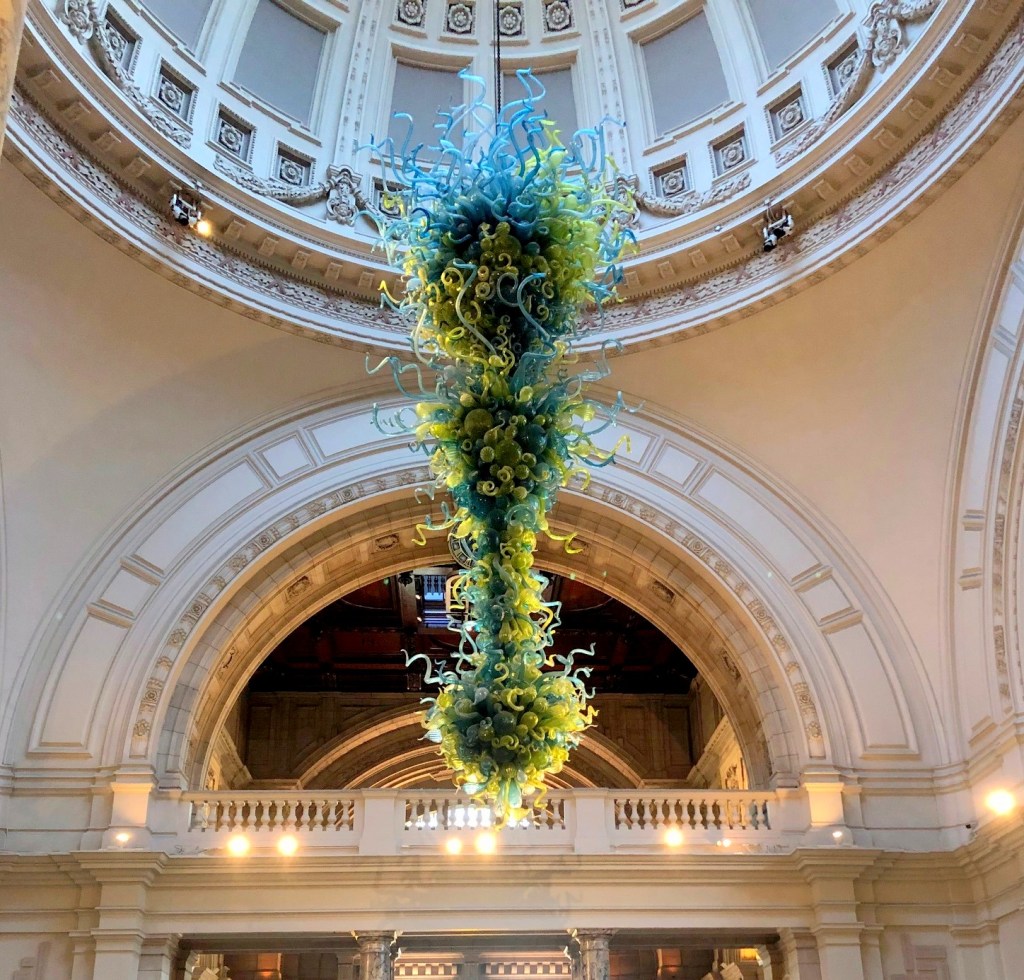
Suspended directly under the ceramic dome of the Victoria and Albert Museum’s main entrance on Cromwell Road is the V&A Chandelier; it is a massive, vibrant explosion of blue, green, and yellow blown glass. Another permanent commercial installation, the Amber and Gold Chandelier, is located inside Harrods of London.
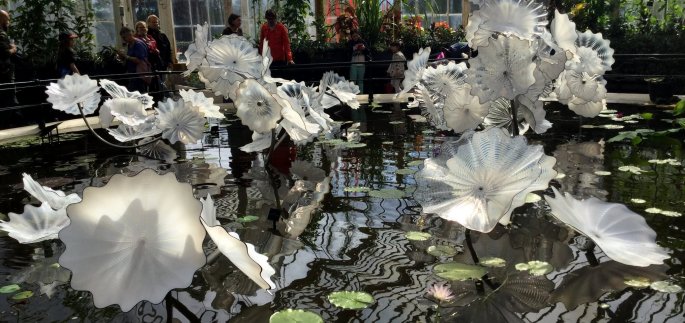
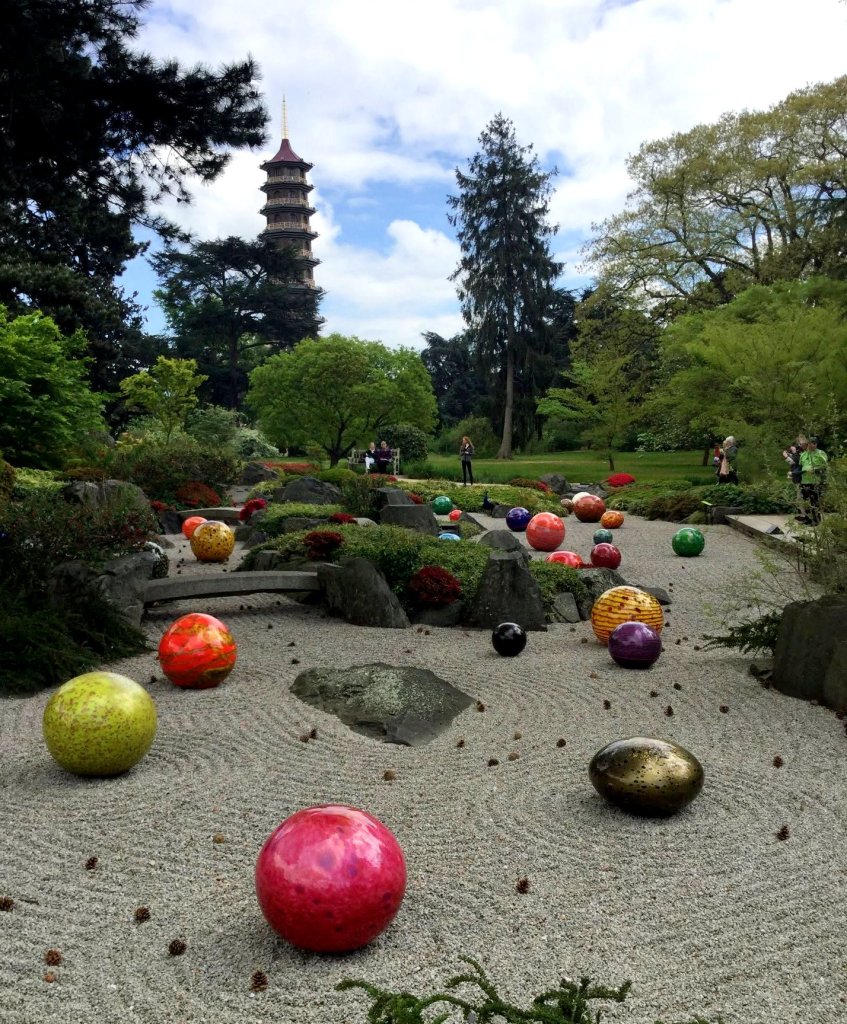
His recurrent stylistic groups—such as Seaforms, Macchia, Persians, and Baskets—are staples in over 200 museum collections worldwide. In 2019 in Kew Gardens in London Chihuly had a fantastic open air exhibition that my sister-in-law, Joyce was lucky enough to see and who took the following photos!
If you should find yourself travelling and have the opportunity to see some of his work, especially in a landscaped environment, I urge you to go and see up close and personal these fantastical works of art. You will not regret it!
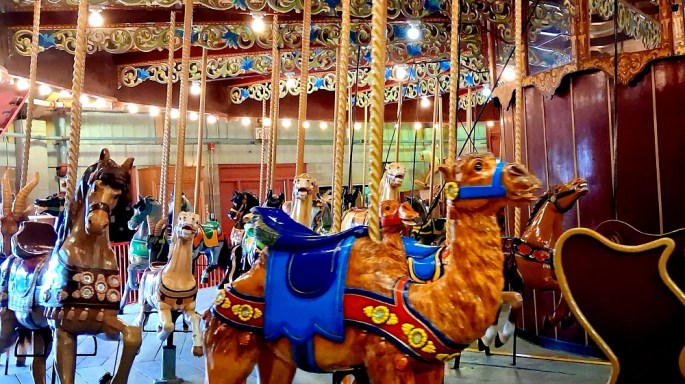
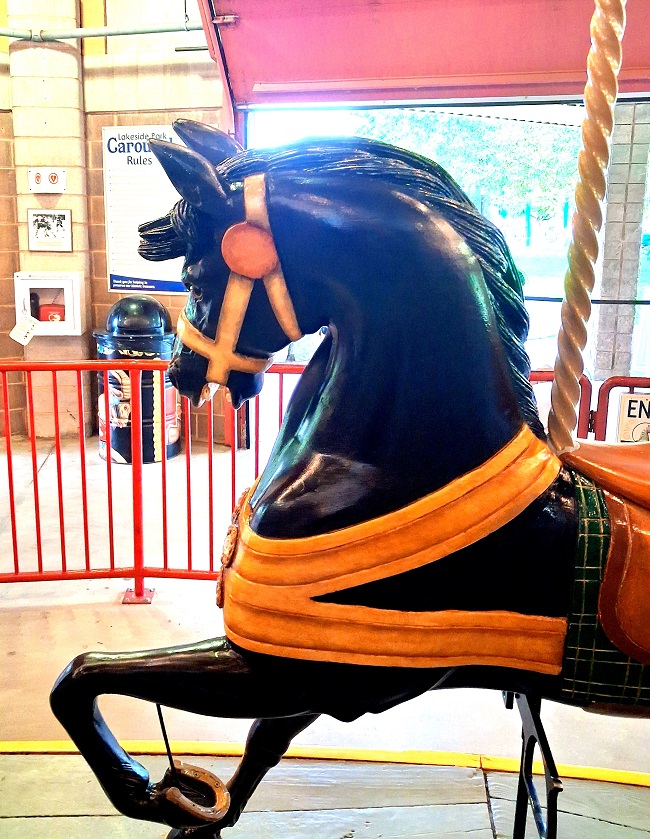
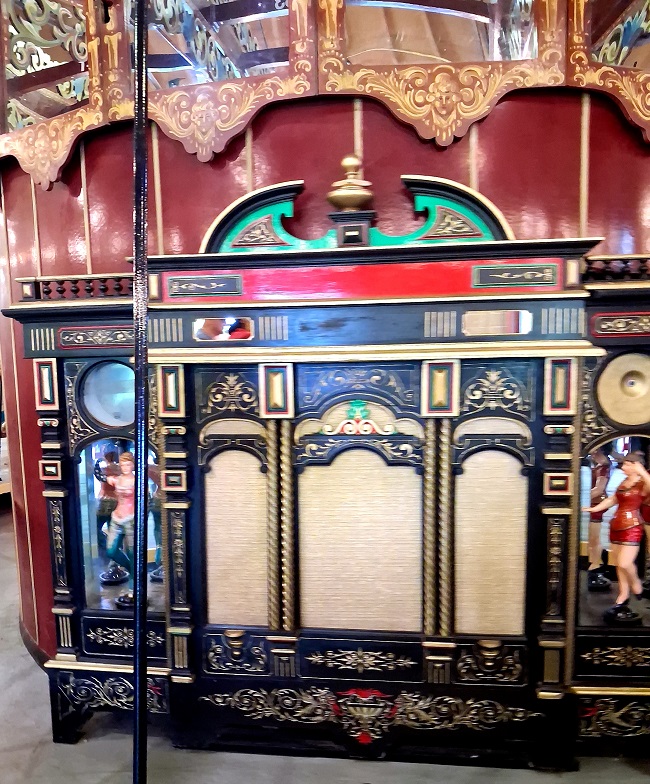
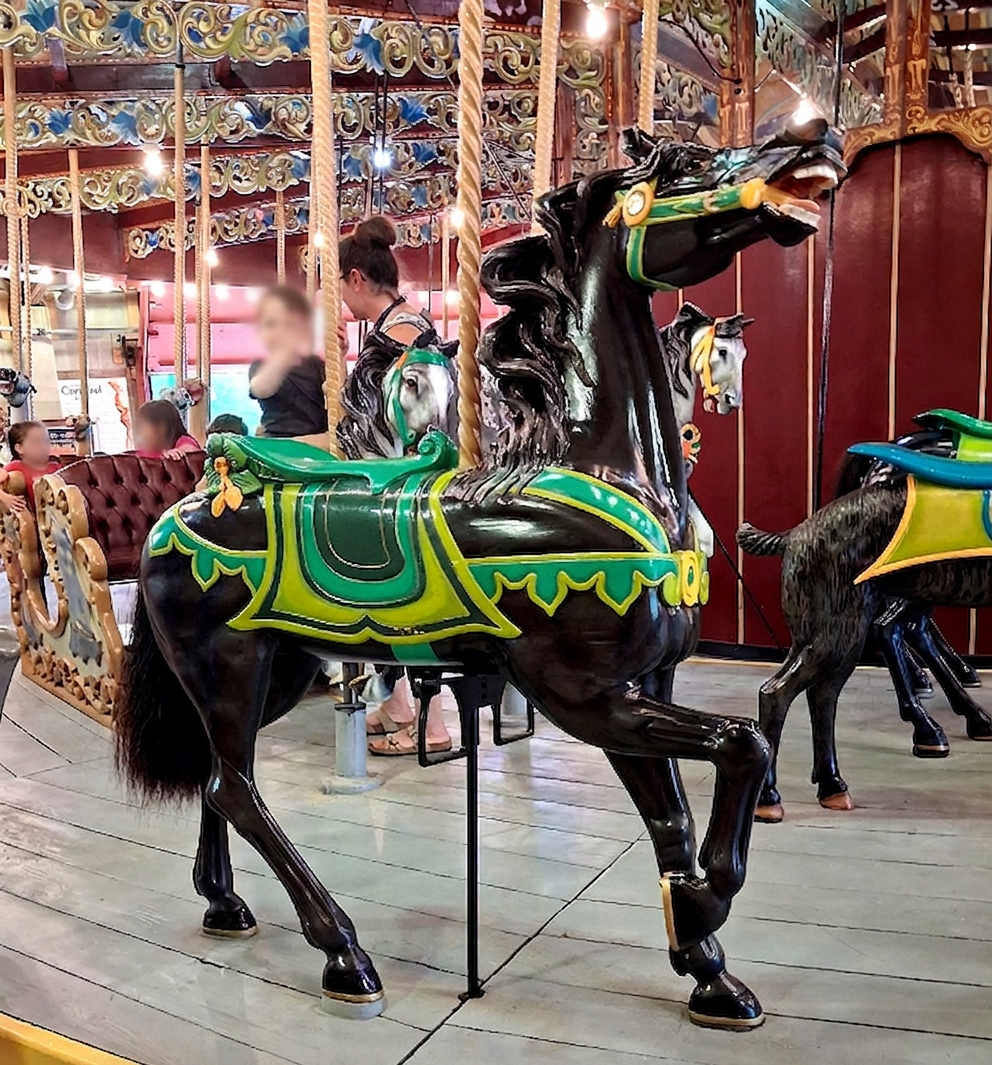
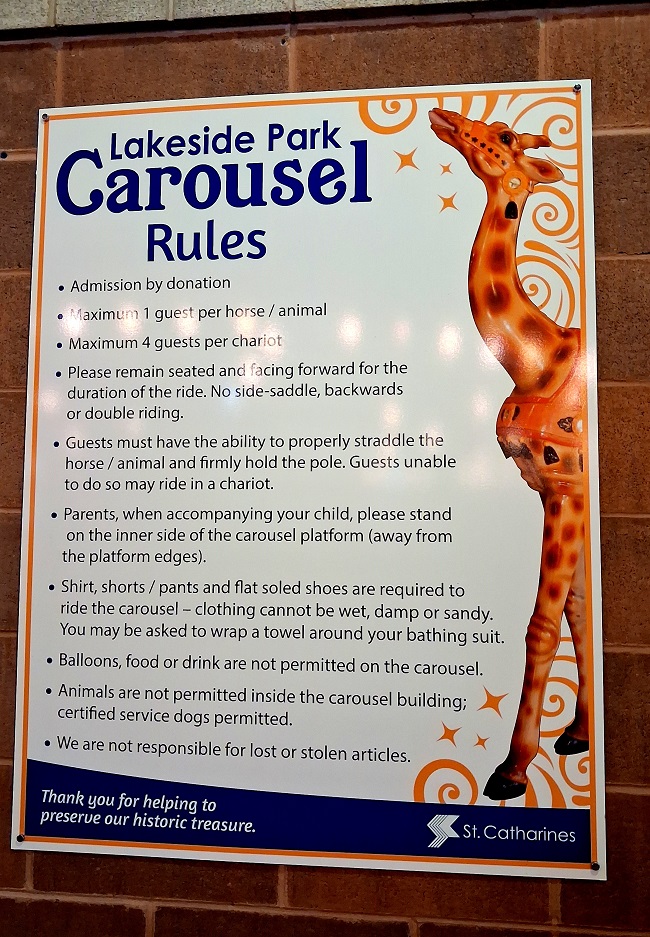
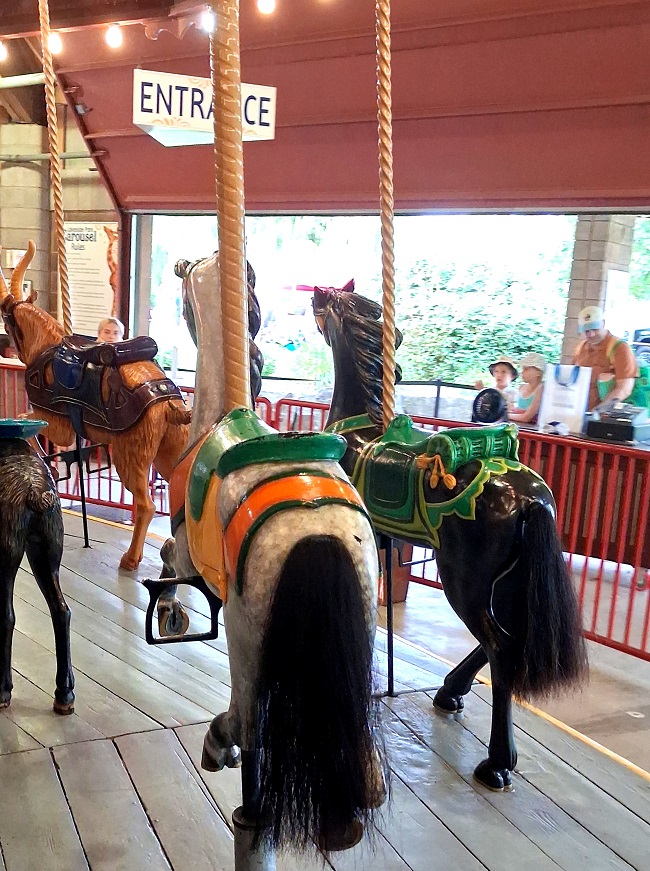
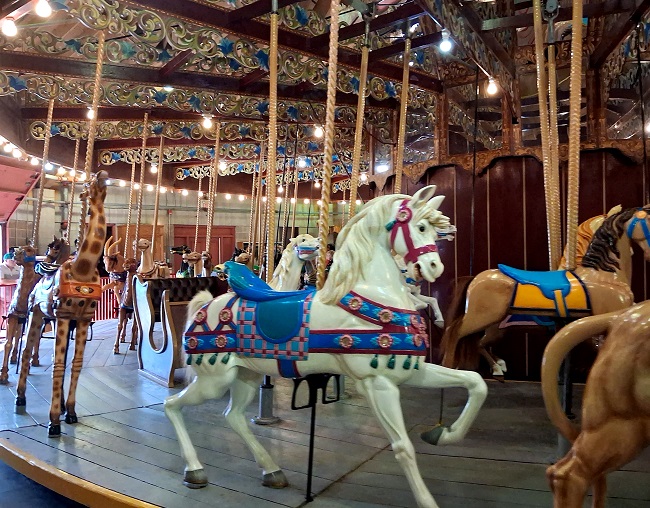
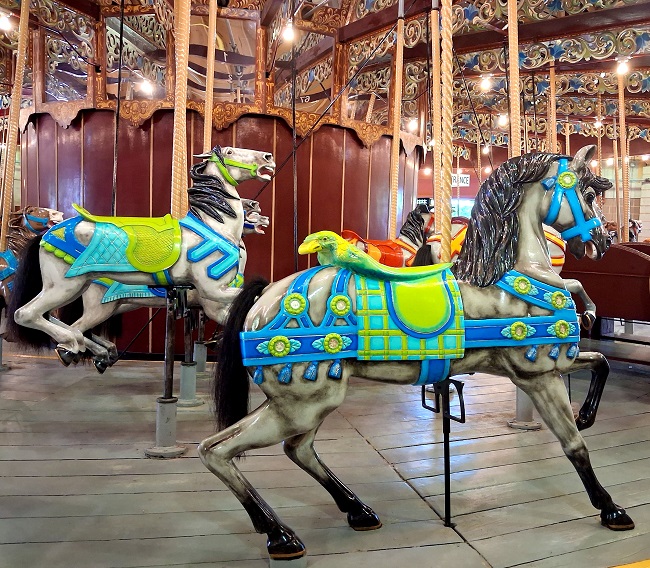
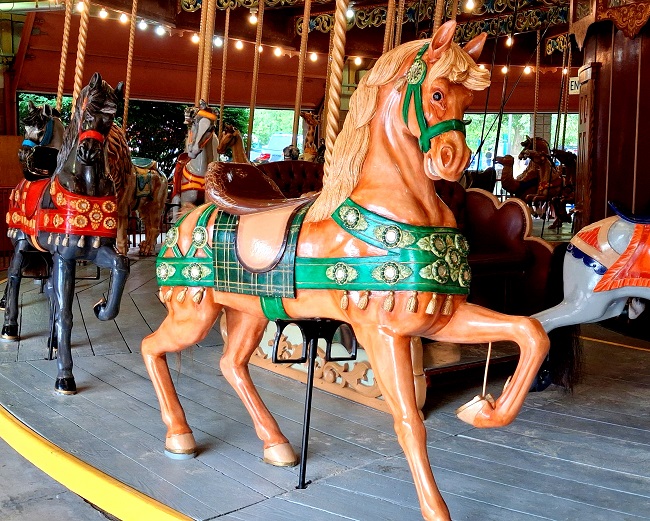
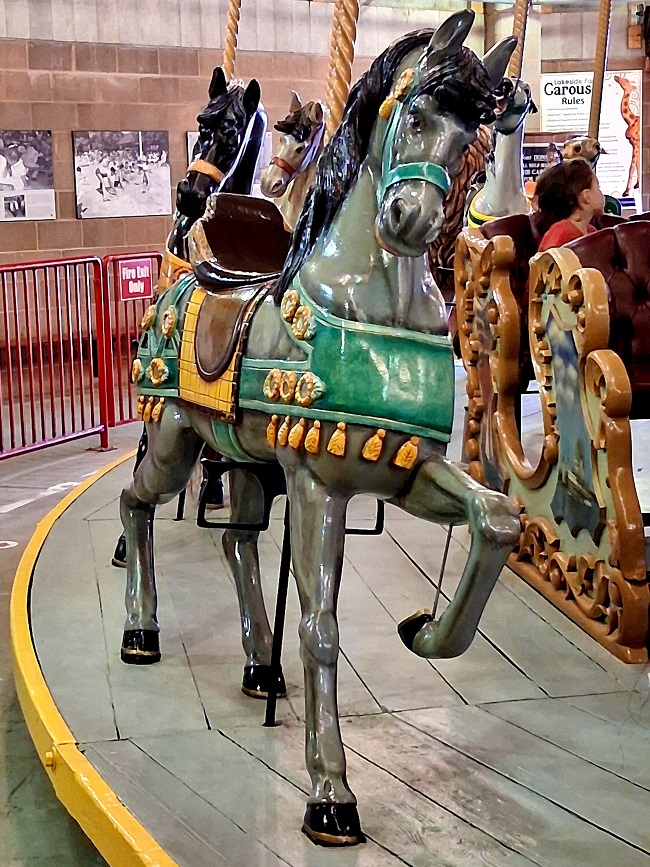
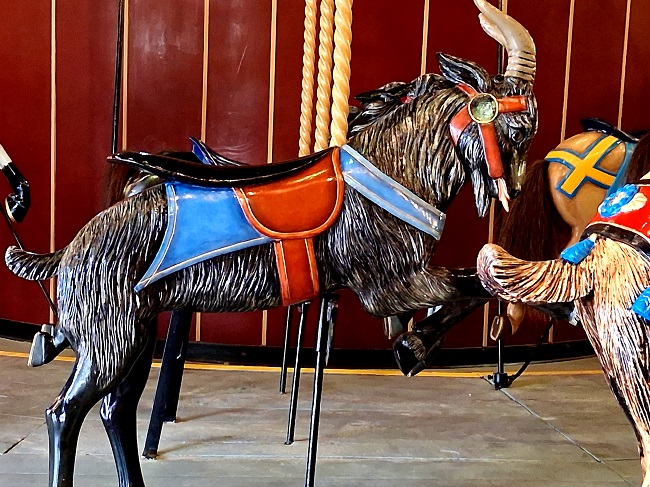
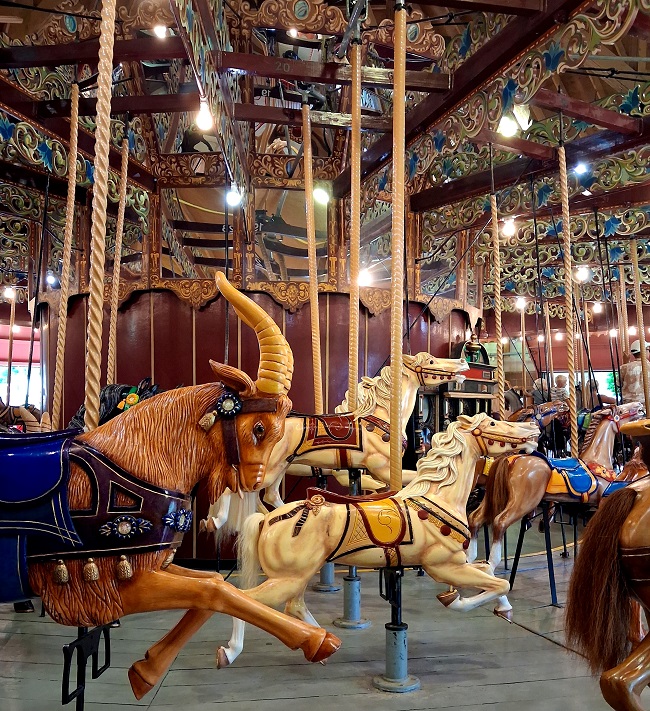
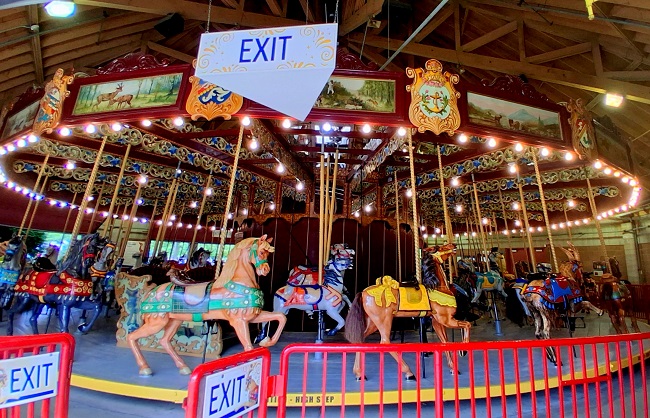
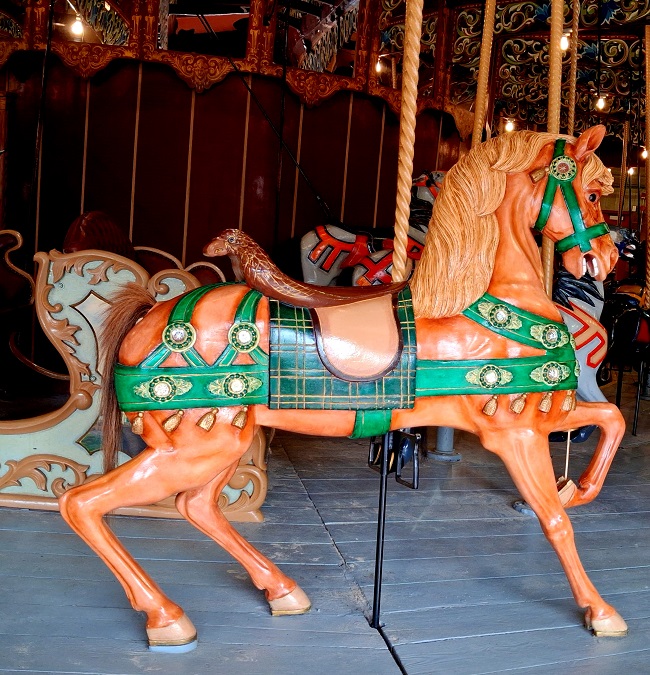
In my previous post of June 11th (On a Carousel trying to catch up with you) I mentioned that I would be going to see this antique carousel in St. Catharines and how excited I would be to see it; and it did not disappoint! Every hand carved animal and chariot has been lovingly restored to its former glory by a group called Friends of the Carousel who help to keep it maintained with some help from City Council and public donations.
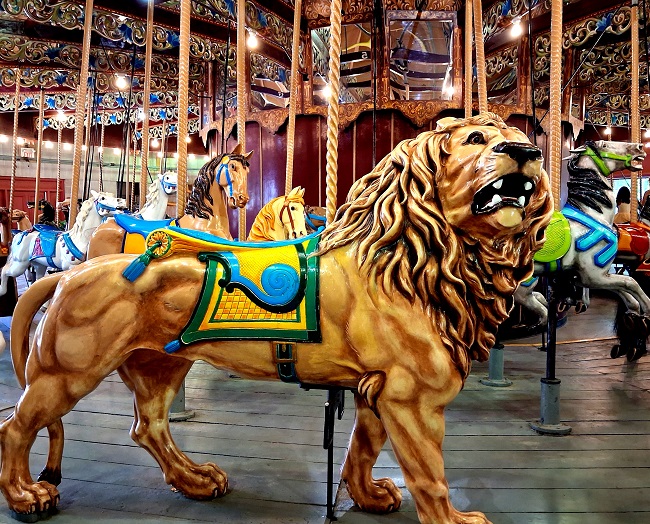
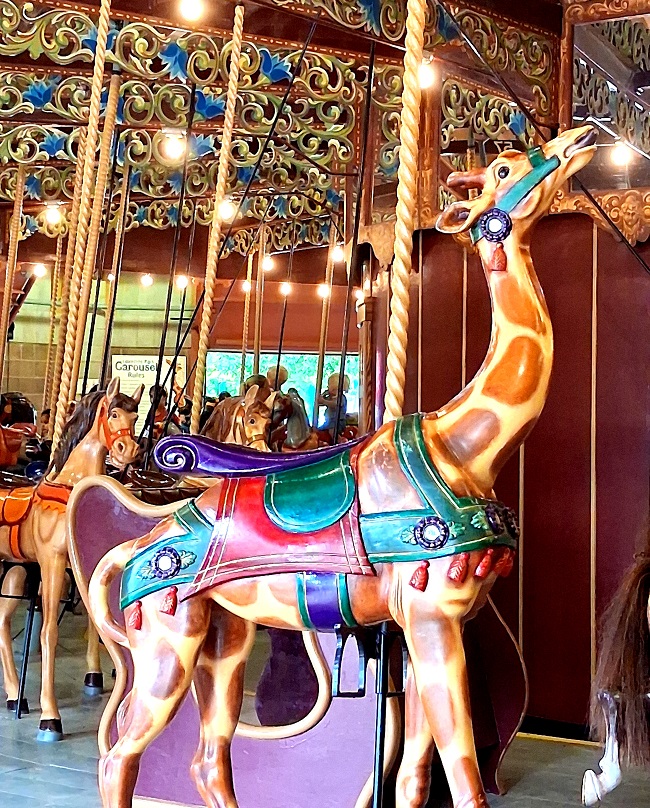
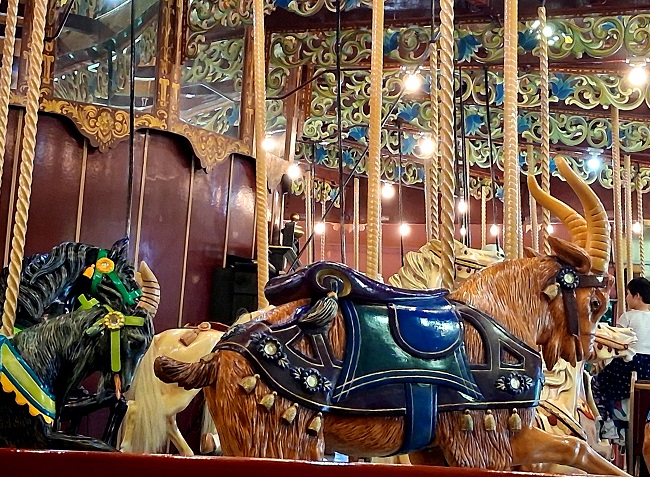
The Lakeside Carousel was carved between 1898 and 1905 in Brooklyn, New York by Charles I.D. Looff’s factory workers. The carousel was relocated in 1921 from its earlier home at an amusement park in Scarborough to St. Catharines. It was purchased for the amusement park flourishing in Port Dalhousie, which had 58 attractions. In those days, more than a quarter million people annually crossed the lake in steamships to visit Port Dalhousie on weekends. The carousel has 68 animals, including horses, lions, camels, goats and giraffes, plus four chariots. The accompanying music is played by an antique Frati band organ which uses a system of paper music rolls to serenade riders. Each animal was hand carved, and the horses still have real horsehair tails.
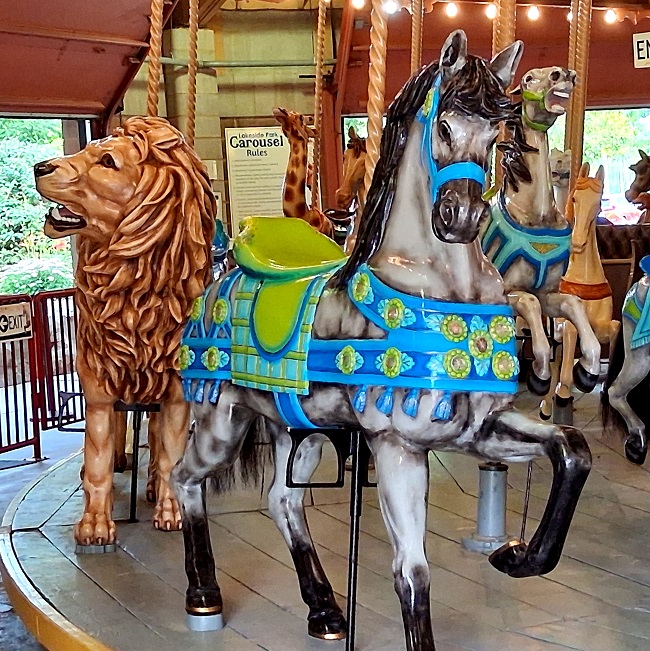
Lion
The Lakeside Park Carousel is one of approximately 350 antique hand-carved carousels still operating in North America – only nine of which are in Canada. The original Looff lion on the Lakeside Park Carousel is one of five existing Looff lions in North America and it is the only one that has its head turned to watch onlookers as it circles by.
The second lion on the Carousel was carved in 2004 by the Friends of the Carousel to replace the original lion that was stolen in the 1970s. One of the stipulations on selling the carousel to the City of St. Catharines was that the fee for riding the carousel would remain at 5 cents. This is the kind of attraction that you should take your kids and grandkids to see, not just for the history but for the genuine craftsmanship that went into its making and the fun of riding around in a circle with no place you have to be.
If you have done any extensive travelling you will have been introduced to various types of toilets (washrooms, etc.) around the world. Some not so nice, like those at some gas stations in North America to opulent bathrooms in higher end hotels. Access to these may be free, through a key on a peg or a swipe card, to a metered door lock but everyone needs a place to relieve themselves from time to time and the older you get the more frequently you need to use these facilities. I believe there is even an app now that tells you where a convenient location exists near you at anytime.
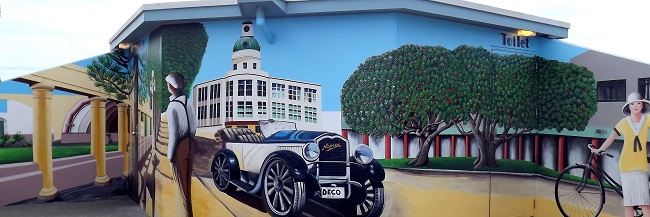
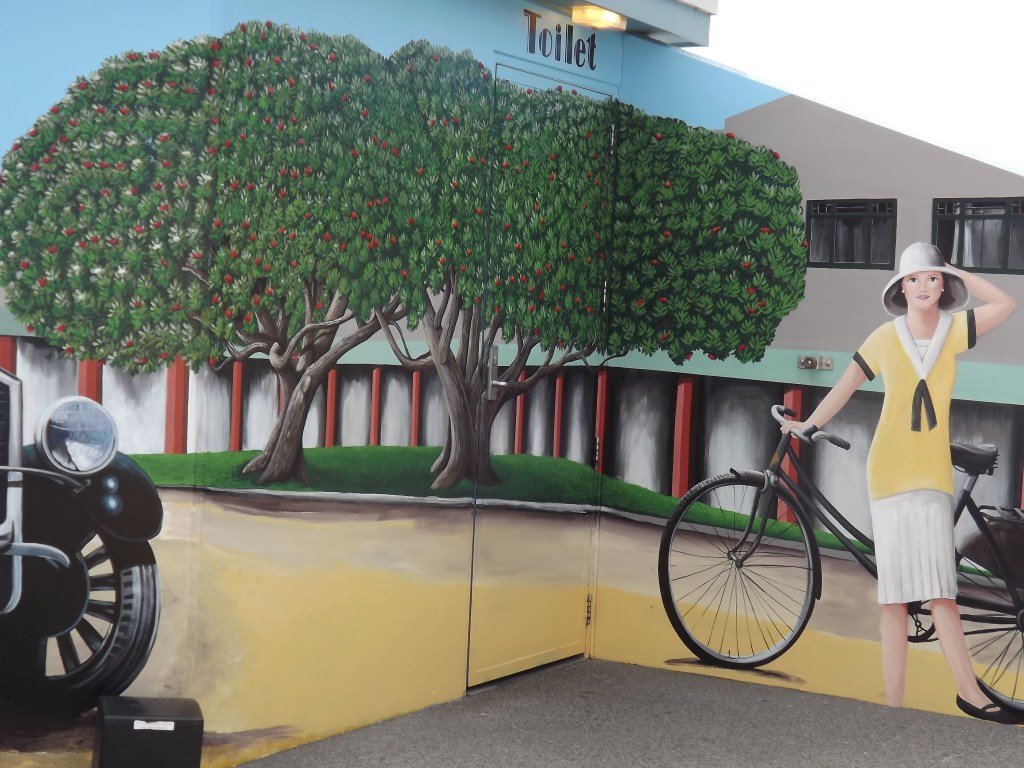
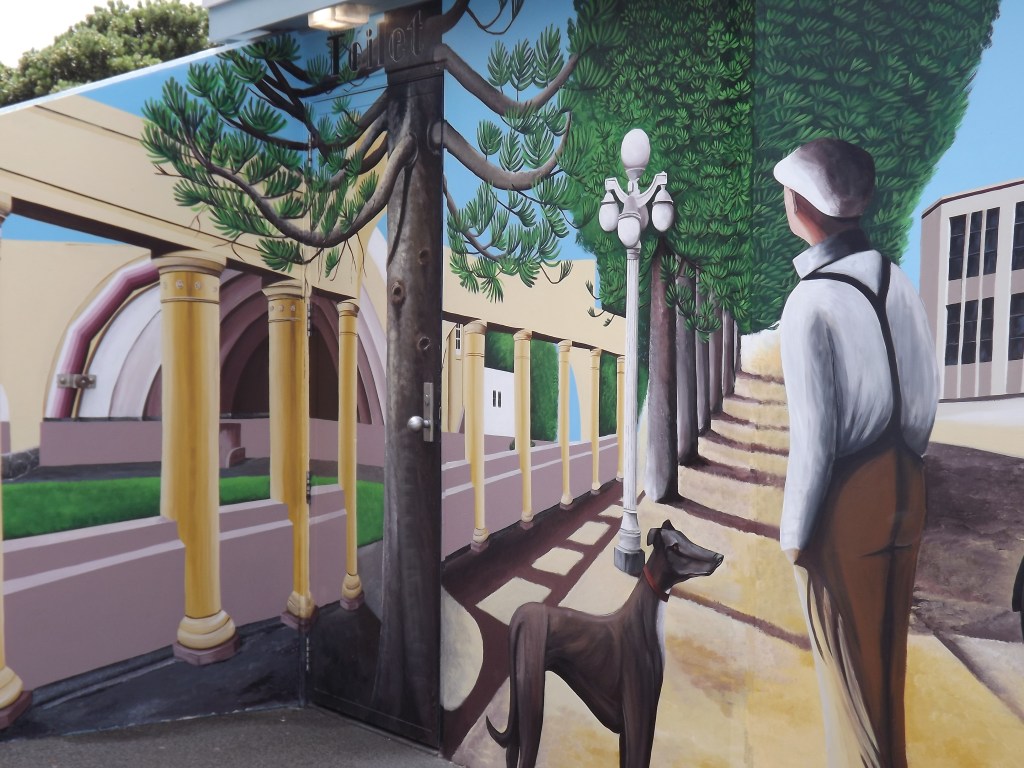
You cannot begin to understand my excitement and pleasure at coming across public toilets in New Zealand and Australia. They have taken mural art to the nth degree far from the boring half moon door in the outhouse behind a cottage in northern Ontario.
Bathroom in Lake Taupo
Women’s toilet in Napier
Men’s toilet in Napier, New Zealand
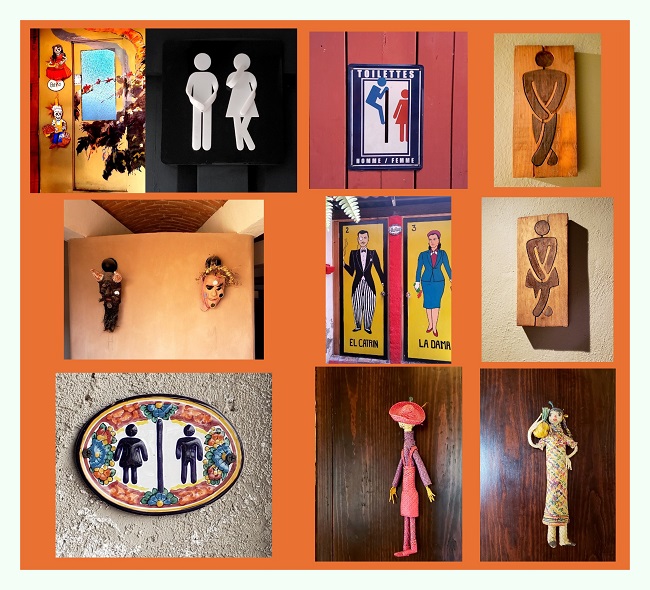
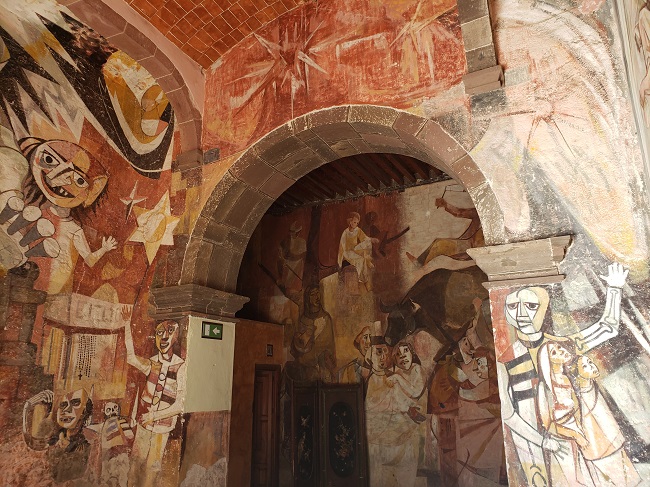
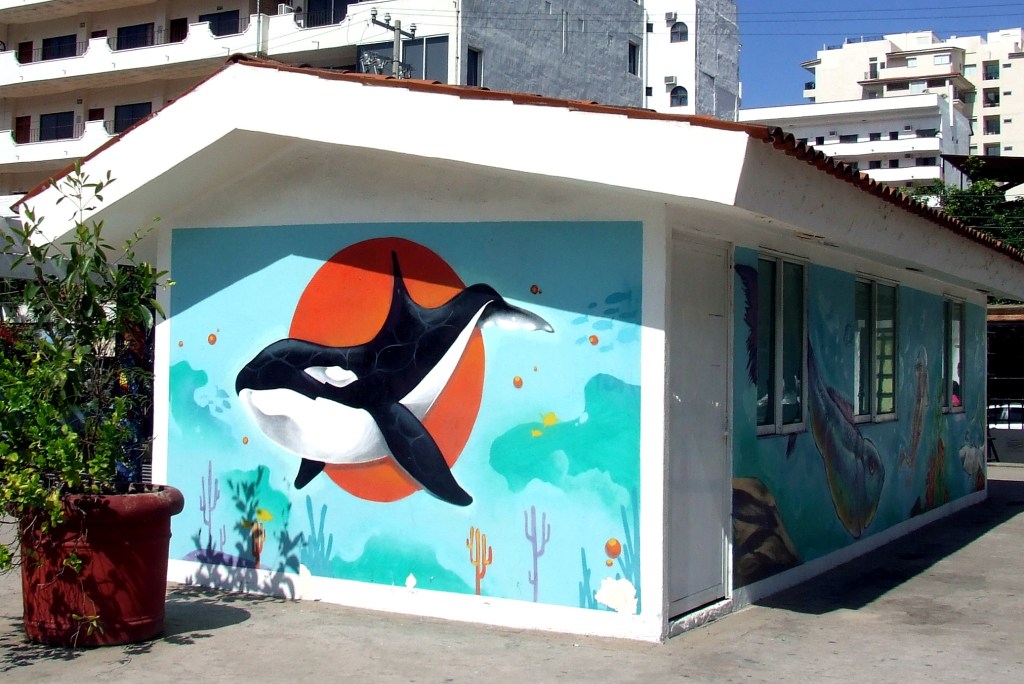
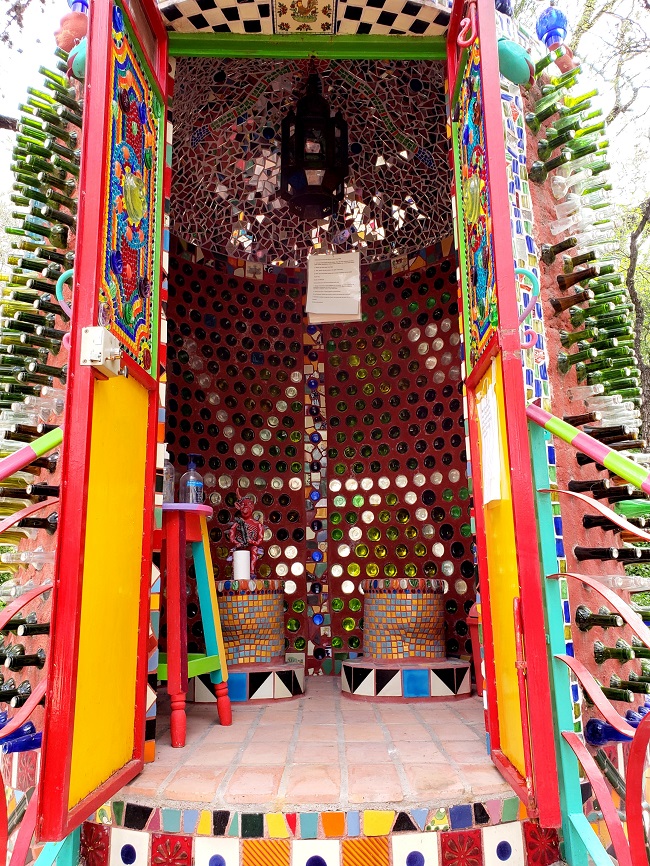
We have also come across some very inventive banos in Mexico on our travels. Sometimes just the markers that let you know whether they are male or female or unisex are pretty cool.
Institute of Art in San Miguel de Allende bano
Public Bathroom in Puerto Vallarta
Outhouse at Chapel of Jimmy Ray
Some unique restrooms that we have heard of but not yet experienced are:
1. A toilet in Arosa, Switzerland that is made of glass and sits over an old elevator shaft, letting you look straight down while you do your business through clear glass.
2. A club in Frankfurt, Germany where men step inside a giant, glittering set of red lips to use the urinal.
3. Kawakawa, New Zealand features public toilets designed by artist Friedensreich Hundertwasser using colorful tiles, stained glass, and a living tree growing right through the roof.
4. Tianmen Mountain in China features a clear glass restroom built onto the side of a sheer rock cliff, offering massive canyon views.
5. The Ice Igloo Restroom in Norway is built seasonally near famous hiking trails; these minimalist stalls freeze your surroundings into a stunning winter wonderland.
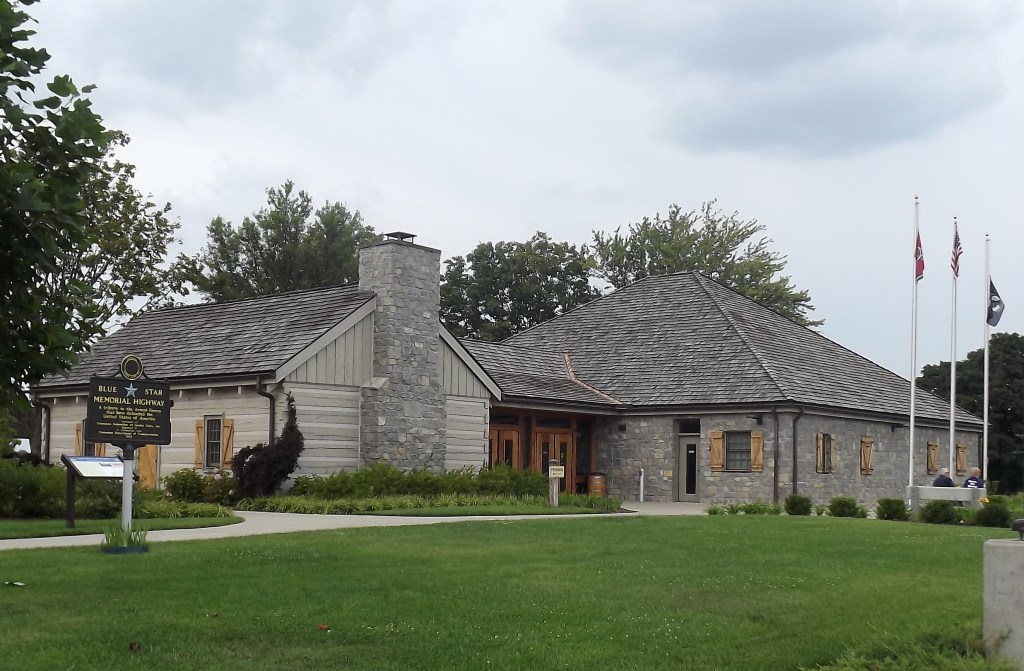
Blue Star Memorial Hwy rest stop on the way to Nashville,Tennessee
What are some of the best/worst public toilets you’ve experienced?
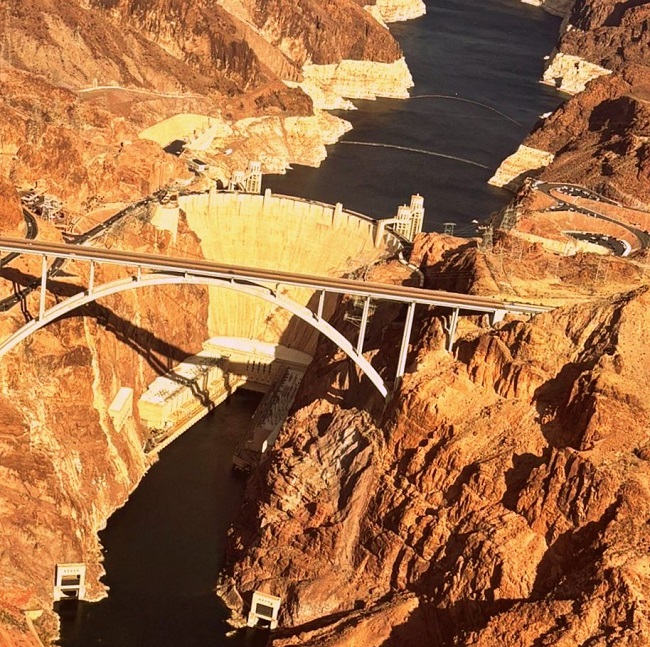
Imagine we are stepping into the dirty 1930s—a time when the American nation was brought to its knees by the Great Depression, yet somehow we reached for the sky to accomplish the impossible. Imagine standing at the edge of the Black Canyon in 1931 which straddles the borders of Nevada and Arizona. Below you, the wild Colorado River rages—an untamed beast fed by the distant, melting snows of the Rocky Mountains. For decades, it had been a force of devastation, unleashing relentless floods that swallowed nearby farms, wiped out settlements, and threatened the fragile dream of expanding the American West.
The nation needed a solution, and thousands of desperate workers needed a lifeline. Enter the United States Department of the Interior’s Bureau of Reclamation, supported by a coalition of two hundred visionary engineers tasked with designing a structure so immense it defied belief.
Over five grueling years, thousands of men descended upon the desert heat to carve through solid rock, plunging more than 500 feet into the canyon walls. They carved out miles of subterranean tunnels and laid massive 30-foot-wide steel pipes known as penstocks. Together, they poured a mind-boggling 3.125 million cubic yards of concrete—creating a monolithic arch-gravity wall that weighs more than 6.6 million tons and rises to an astonishing 726.4 feet.
Against all odds, the workers finished the dam, its power plant, and its striking Art Deco architectural details in 1936—a full two years ahead of schedule.
Initially called the Boulder Dam before being renamed the “Hoover Dam”, this structure didn’t just tame the river—it redefined the Southwest. It birthed Lake Mead, the largest man-made reservoir in the United States, plunging to depths of 532 feet at full capacity and holding enough water to submerge the entire state of Pennsylvania a foot deep. It provided life-giving irrigation to arid desert fields, provided steady jobs when the country needed them most, and fired up massive hydroelectric generators that sent clean, roaring electricity straight to the burgeoning neon lights of Las Vegas and the sprawling neighborhoods of Los Angeles. It was, quite rightfully, crowned by the American Society of Civil Engineers as one of America’s Seven Modern Civil Engineering Wonders.
Today, if you visit, you can walk for free along its 1,244-foot crest, looking down at a structure engineered so masterfully that its concrete physical body is estimated to endure for thousands—if not tens of thousands—of years. However… here is the tragic twist in our historical narrative.
While the concrete titan itself may stand virtually forever, its functional heart is racing against time. Lake Mead is shrinking. When regional leaders signed the 1922 Colorado River Compact, they made a critical error: they promised more water to surrounding states than the river actually possessed. Today, that mathematical miscalculation has caught up with us. Driven by long-term drought, hotter temperatures evaporating the reservoir’s surface, dwindling snowpack in the Rockies, and the relentless demand of millions of people and farms, more water is being pulled out than the river can replenish.
The Hoover Dam stands as a monumental testament to what human ingenuity can conquer when pushed to the brink. But as we look at its receding waterlines today, it presents us with a profound question for the 21st century: We proved we could tame the wild river—but can we learn to live within its limits?
For many, fearing death is seen as an unnecessary tax on the mind because it is completely unavoidable. Since it is a universal certainty that applies to everyone, worrying about it is viewed as a waste of precious energy.
Accepting the Unavoidable: Death is simply a guarantee. Fearing it is described as being as counterproductive as fearing basic, everyday bodily functions.
A Release from Anxiety: Acknowledging that you cannot stop death allows people to drop the burden of trying to avoid it, freeing them from “unjust anxiety.”
Probability and Modern Life: In the modern world, the vast majority of people live to old age. Because it is a distant certainty for most, there is no logistical reason to let it overshadow the present.
2. The Preservation of “The Present”
Obsessing over death actively ruins the only thing we actually possess: life. Those who do not fear death choose to focus entirely on the quality of their Earthly existence.
Living Mindfully: As Bob Marley suggests, if you know what life is worth, you look for it on Earth. The human brain is naturally wired to focus on waking up, making plans, and looking forward to tomorrow.
Lessons from Tragedy: Witnessing the loss of a loved one—even a child—often highlights just how fleeting and fragile life is. Instead of causing fear, this realization inspires people to face life with excitement, wonder, and gratitude.
Avoiding a Half-Life: To fear death is to stop living entirely. It is better to live a short life full of vitality than a long life paralyzed by fear. As one person noted: “If the grim reaper wants me, he knows where I am.”
3. The Nature of Consciousness (The “Switch” Theory)
Many individuals derive peace from the biological and philosophical reality of what death actually is: the total cessation of consciousness.
The Absence of Experience: You cannot actively “experience” being dead. Just as you do not consciously experience the hours spent in a dreamless sleep every night, you won’t be there to miss life or feel nothingness.
The Sweet Release: In death, all suffering, pain, and fighting cease. Even though joy is gone too, you lack the consciousness to miss it. It is a state of total, permanent peace.
4. The Metaphor of “Leaving the Party”
Perhaps the most poignant reason people do not fear death is the natural weariness that comes with a long, full life. Death is not seen as a failure, but as the natural culmination of a book’s chapters.
Knowing When It’s Time to Go: Life is compared to a great party. Eventually, you have had your fill, the crowd thins, and the music changes to tunes you no longer recognize. Staying longer means risking becoming a burden or watching your quality of life deteriorate.
Comfort in the Next Generation: There is peace in seeing the “newer guests” keeping the party going, allowing the older generation to step away gracefully.
The Desire for Rest: For those who live to a ripe old age, the thought of living forever becomes exhausting. Death is reframed not as a terrifying void, but as a beautiful, well-earned, “good, long sleep.”
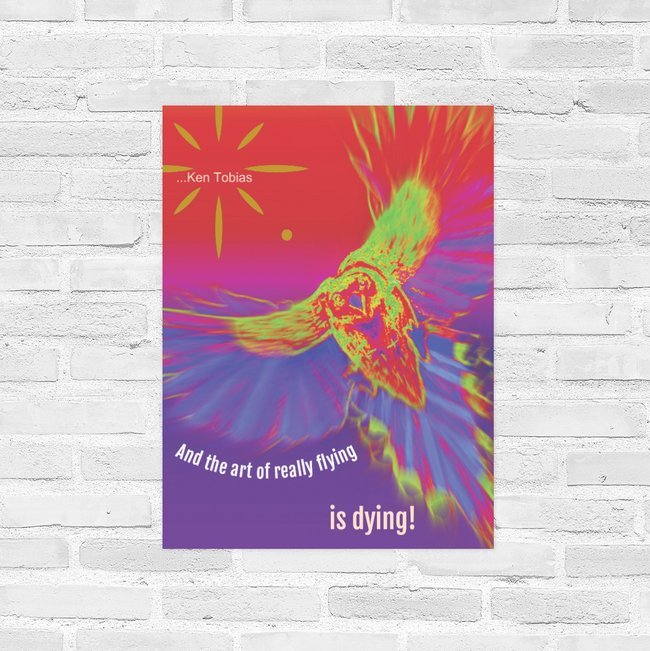
In this song is he talking about the ability to fly or that dying is the biggest flight your soul will take?
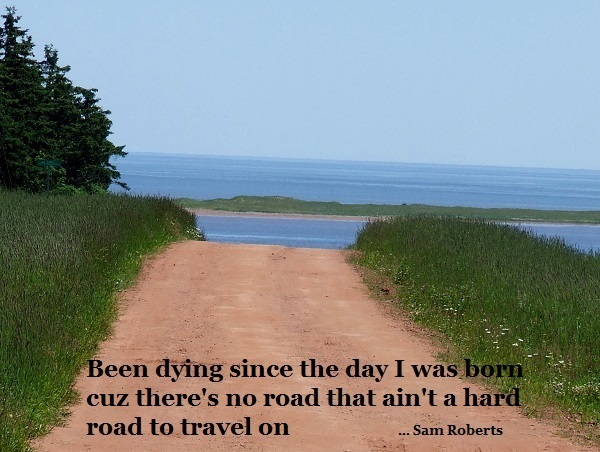
As soon as you are born, you are on the road to death. I’d rather live a short life full of life than a long life of nothing. Some people have no fear of death because they get the point. They enjoy the trip without worrying about the destination.
A long time ago, 1987 to be exact I had the good fortune to tag along with a travel agent who was checking out Cartagena for her agency in order to make suggestions to their customers on where to stay, what to see and do and rate some restaurants. Not a hard assignment really. We stayed at the Hotel Capilla del Mar which had opened only two years previous. I recently looked it up and the rates are still very reasonable (at least off season) and the reviews complimentary, especially regarding the breakfast buffet. Other things going for it are the proximity to the beach, the rooftop pool and the friendly staff; and though we took a cab from the airport at the time, they now offer a shuttle bus.
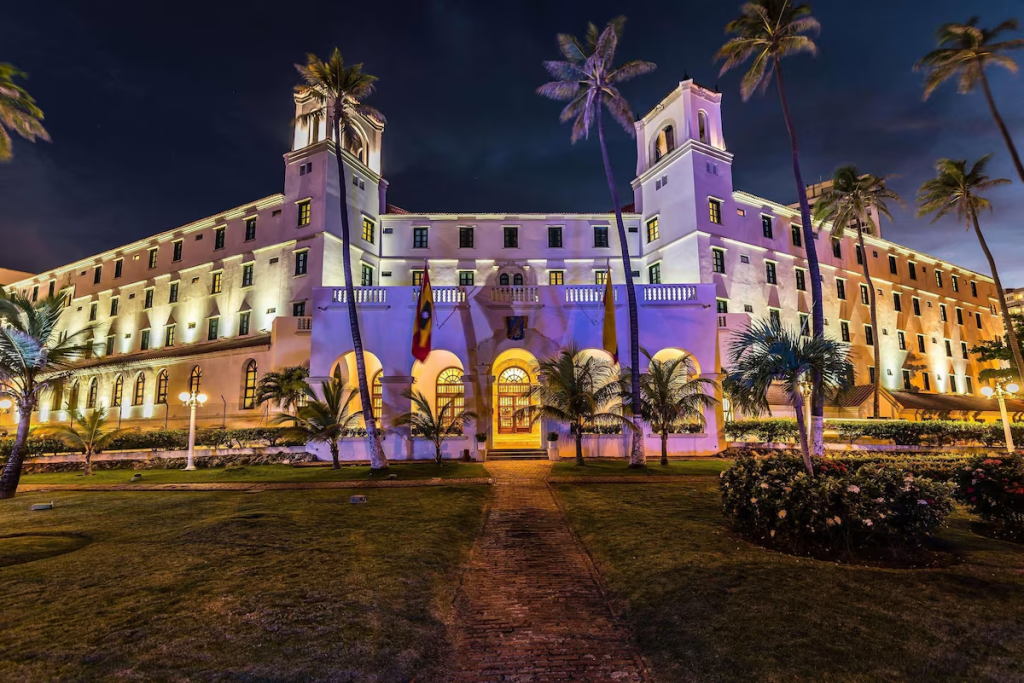
At that time the luxury hotel of choice which we walked to was located at the very end of the peninsula – the Hotel Caribe. As Cartagena’s historic premier property, it was the city’s original grand resort (built in 1945). Known for its beautiful neocolonial architecture, expansive tropical gardens, and prestige, it remained a legendary social hub and flagship for high-end travelers throughout the 1980s. We only had cocktails there as we were not members of the posh elite.
We did however, have a great time in Cartagena. Seeing what looked like 15 year old kids toting machine guns was a little off putting but I’m pretty sure things have changed since then. During the late 1980s and 1990s—the height of Colombia’s drug war and internal conflicts—visible military personnel carrying automatic weapons were a common security measure in major cities and tourist zones to deter cartels and insurgent groups. While you don’t have to worry about a war-zone atmosphere, modern safety concerns have shifted to opportunistic street crime. The biggest nuisances on the beaches today are incredibly aggressive street vendors, pickpockets, and overcharging scams.
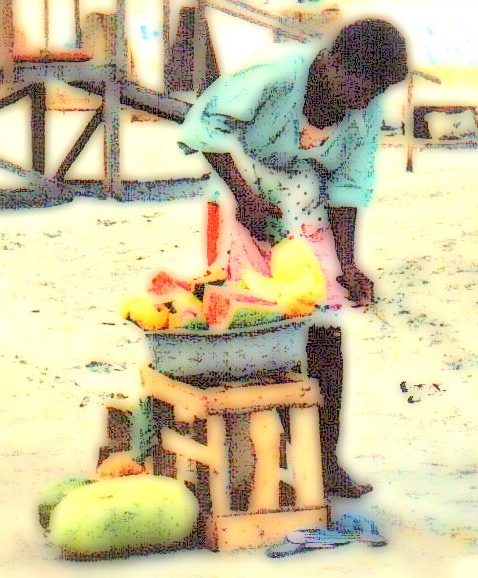
We body surfed in the ocean and sun bathed by the pool and bought fresh fruit when we needed a snack and walked for long distances on the beach, stopping every so often at a little pizzeria or patio for a refreshment and later on at night to listen to local musicians and RELAX.
Perched on the highest point in Cartagena, Convento de la Popa (The Convent of the Stern) is an absolute must-visit for the best panoramic views in the city. Built by Augustinian monks in the early 17th century, the convent gets its unique name because the hill it sits on resembles the stern (la popa) of a ship. Historically, it served a dual purpose: a sanctuary for faith and a strategic lookout point to spot approaching pirate ships.
Today, it offers a peaceful, historic escape from the bustling streets below. The convent features a stunning, Spanish-style interior cloister filled with bright, cascading flowers and beautiful colonial arches.
Travel Tip: Do not attempt to walk up the hill, as the path isn’t safe for pedestrians. Instead, take a licensed taxi or an organized tour right to the entrance at the top. It’s best visited in the morning or late afternoon to catch the golden light and avoid the midday heat!
Castillo San Felipe de Barajas is a formidable fortress dominating the Cartagena skyline, and is a designated UNESCO World Heritage site.
Located on the Hill of San Lázaro, it was strategically positioned to protect the city from landward attacks and to guard the vital entrance to the bay. Built in 1657 and expanded significantly in 1762, the fortress was virtually impregnable. The fort is designed so that if attackers managed to breach one section, the defenders could retreat to a higher point and fire down onto the captured area. Its geometric angles left absolutely no blind spots for approaching enemies.
One of the most fascinating features is the vast underground network of tunnels. At the very top of the fortress, a massive Colombian flag flies proudly, providing a great backdrop for photos. Just like La Popa, it offers incredible views of the city, but from a closer vantage point. You get an excellent look at the Old Town walls and the surrounding water.
Travel Tip: There is very little shade on the fortress, and the stone traps the heat, making it feel like an oven by midday. Visit early in the morning right when it opens, bring plenty of water, and wear a hat!
Just outside the Walled City, Getsemaní is the cultural heartbeat of Cartagena. Historically a working-class neighborhood settled by artisans and freed slaves, it has transformed into a vibrant hub of street art, music, and local life. Gathering on the walls to watch the sun sink into the Caribbean Sea is a daily ritual.
What to do: Walk down the colorful, umbrella-lined Calle de las Sombrillas and check out the political and cultural murals.
The Night Vibe: In the evening, head to Plaza de la Trinidad. Locals and tourists gather here to eat street food, drink cold Aguila beers, watch street performers, and listen to live music.
You cannot leave without eating local Caribbean food. La Cevicheria (made globally famous by Anthony Bourdain) is still a legendary spot for fresh, lime-cured seafood, though you should expect a wait!
Doris was widely considered the most traditional, upscale, and celebrated restaurant in Cartagena during the 1970s and 1980s (famous for its exquisite seafood and massive lobster festivals), it unfortunately has closed it’s doors but we had a splendid seafood dinner there. Unlike Doris, La Langosta Latina is still around, successfully serving seafood in Cartagena for nearly 40 years. Opened back in 1985, it is one of the city’s true legacy seafood establishments. It retains a very traditional, white-tablecloth, upscale Caribbean-classic atmosphere. Because it sits slightly outside the frantic main tourist grid of the Walled City, it usually offers a more relaxed, white-glove dining experience that recalls Cartagena’s golden era of dining.
Colombia produces anywhere from 70% to 90% of the world’s finest emeralds, Because Cartagena is a massive cruise ship and international tourist hub, it is flooded with high-priced tourist traps, aggressive commission-seeking tour guides, and outright street scams. Always buy at a reputable shop and ask for a certified authenticity Guarantee. Never buy on the Street as they are almost universally fake. Don’t take recommendations from tour guides, taxi drivers, and in some cases hotel concierge as their will be 10 -30 % kickback commissions added directly to the price tag. Walk in on your own. You can get a lovely stone at a decent price if you know what you are doing.
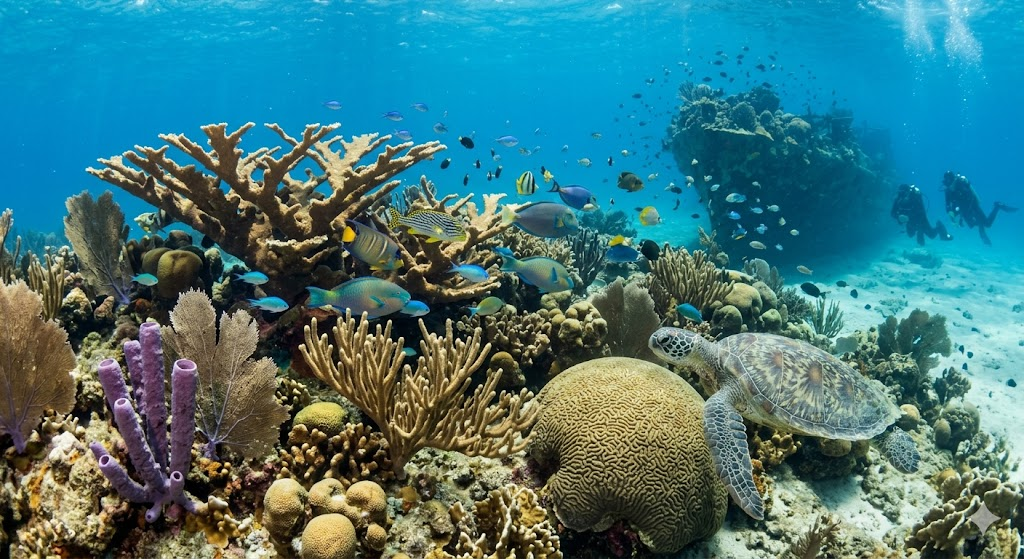
Now the main reason I wanted to tag along besides the fact that my room was paid for was that I would be able to go scuba diving in just a bathing suit in temperate 82 – 84 degree water and see colorful coral life and dense schools of colorful reef fish: blue tangs, parrotfish, triggerfish, angelfish, and macro life like seahorses and arrow crabs; instead of a rubber suit dive in the usual weeds and old truck tires of cold, murky Canadian lakes. You don’t always have to go all the way to the islands. There are some fascinating spots closer to the city lines, including a collection of about seven intentionally sunken barges, ships, and even an airplane that create excellent wreck dives
That to me was the highlight of the trip, when you are swimming below the water and marvelling at all the activity, color and beauty of the ocean, it is like time stands still and another different world opens up. It was simply breathtaking and something I shall never forget. Image below is AI generated as I did not possess an underwater camera at the time
There are certain experiences in life that sound charming in theory and feel like a personal vendetta in practice. The Mirador in San Miguel de Allende falls neatly into that category.
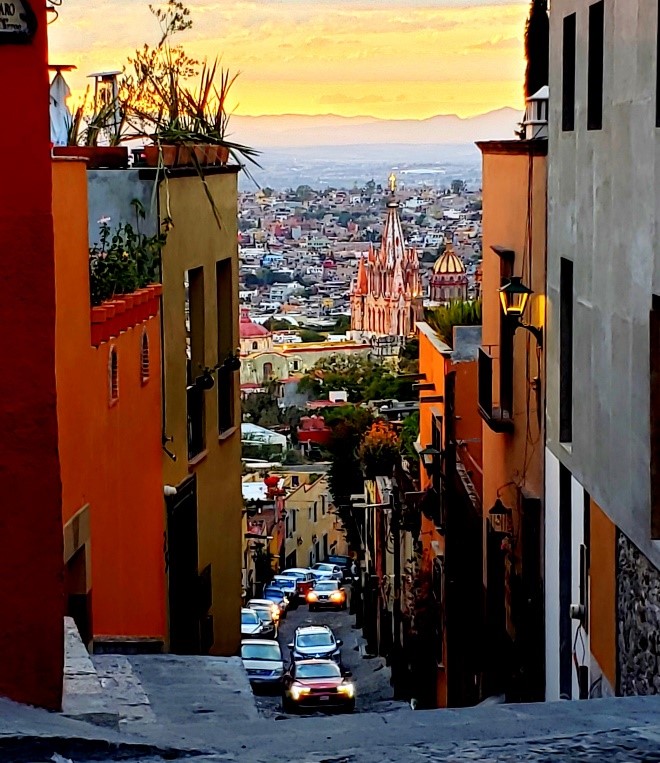
Now, if you’ve never heard of it, the Mirador is essentially a scenic lookout perched above the town, offering postcard-perfect views of terracotta rooftops, church spires, and that golden, late-afternoon glow that makes everyone briefly consider quitting their job and moving to Mexico. It’s lovely. Truly.
Getting there, however, is another matter entirely.
Let me translate it into Canadian: imagine climbing the stairs of the CN Tower for fun. Then add a dash of the Grouse Grind for personality. Sprinkle in 30-degree heat and the faint suspicion that you’ve made a series of poor life choices. That’s the Mirador walk.
Naturally, this is how our day unfolded.
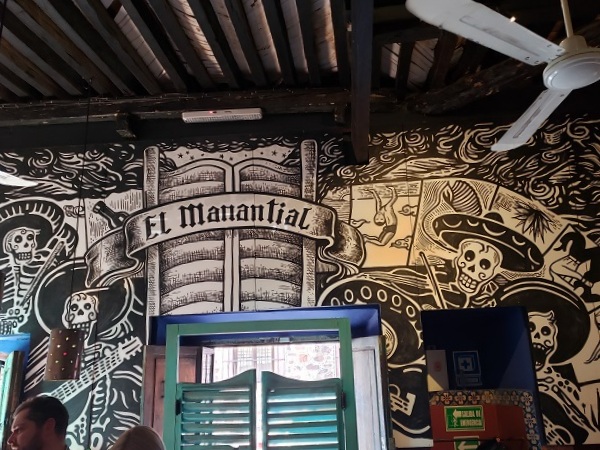
The plan, you see, was simple. Innocent, even. A quick stop at El Manantial, a charming little bar we had spotted in a YouTube video. It promised excellent margaritas, Day of the Dead murals, and swinging saloon doors, which frankly sounds like the beginning of a very good decision. After that, a civilized dinner on a rooftop near the Jardín. Easy.
We had already been walking for about half an hour when we wandered through a park hosting an art show, paintings, sculptures, the kind of cultural detour that makes you feel pleasantly accomplished. Then we exited the park, consulted our GPS with blind faith, and spotted a staircase. A staircase that, in hindsight, was less “shortcut” and more “ominous prologue.” Up we went.
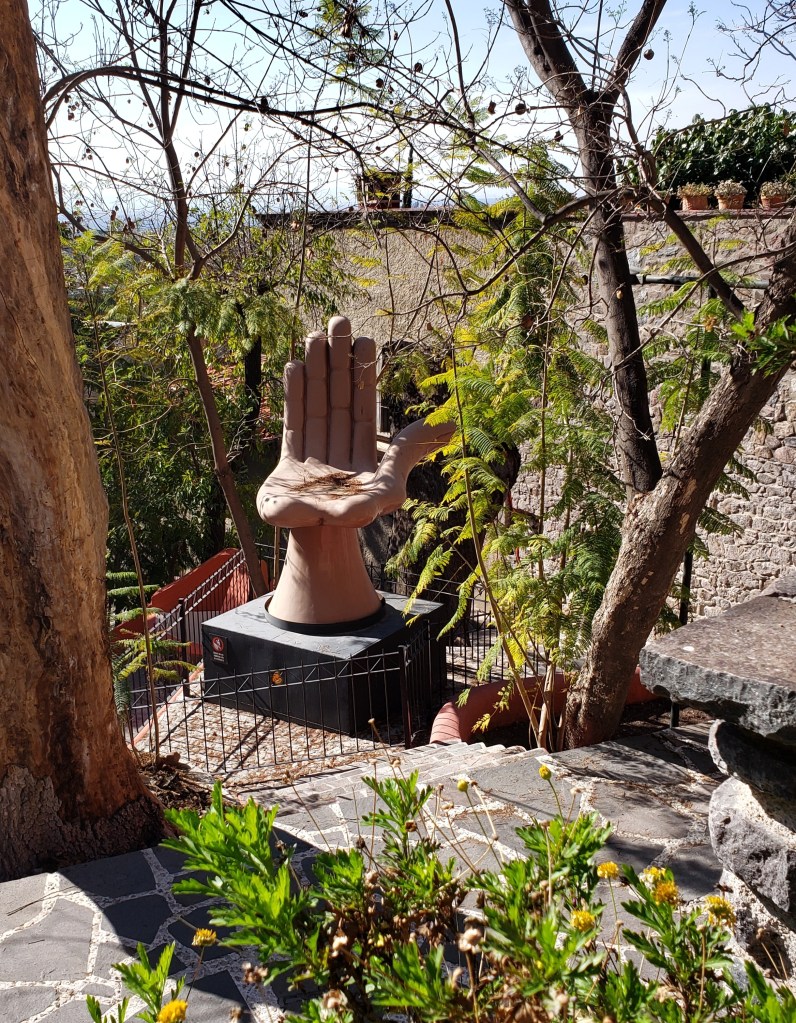
At the top, we paused, lungs filing a formal complaint, and were rewarded with a sculpture of a giant hand, which I had seen online and never located. “Well,” I thought, “this is going splendidly.” A bonus discovery. A triumph. That, as it turns out, was the last coherent positive thought I had for quite some time.
Because just around the corner… more stairs. And then more.
And then the slow, creeping realization. That dawning horror. The mental replay of earlier advice: “Don’t walk to the Mirador. Take a cab. You’ll thank us.” We had, in fact, taken a cab up there previously for precisely this reason. And now, like two stubborn protagonists in a cautionary tale, we were doing the one thing we had explicitly been trying to avoid. “For fuk’s sake,” I muttered between gasps, “how stupid are we?”
The stairs came in waves. You’d crest one set, heart pounding like a percussion section, only to round a corner and be greeted by another flight, waiting patiently like it had all day to ruin you.
We stopped at least four times. Possibly more. Time loses meaning when you’re negotiating with your own cardiovascular system. Thankfully, we had a bottle of water, which we drained with the reverence of people who now understood the value of hydration on a spiritual level. The sun, meanwhile, had decided to participate enthusiastically, turning the whole ordeal into a slow roast.
There were two other women making the climb. One looked about half my age and stopped just as often, which provided a small, petty comfort. Misery loves company, especially when it’s wheezing beside you. At one point, while we were paused and pretending this was all part of a fitness plan, my husband casually remarked, “If I have a heart attack, just roll me down the hill. It’ll be easier for the medics.”
By then, I had entered a new phase of the journey: open hostility. I was swearing like a long-haul trucker and no longer cared if we ever reached the restaurant, civilization, or the afterlife. And then, finally, the summit.
We reached the top around four o’clock, having left the house at 2:30. A brisk outing, if you define “brisk” as “an endurance event.”
We found El Manantial, collapsed into two chairs, and ordered margaritas with the urgency of people who had just survived something mildly heroic. Ken disappeared to the washroom. I sat there, oddly fascinated by the fact that I didn’t need to go. Not even slightly. It turns out that when you sweat out your entire body weight, certain systems take a break.
After a restorative pause and the slow return of dignity, we made our way back down toward the Jardín. I stationed myself in the square, listening to mariachi bands and contemplating my life choices, while Ken secured a reservation at Trazo 1810. And here’s the important part: it has an elevator. A glorious, civilization-affirming elevator.
Dinner was lovely. Wine was involved. The moon rose obligingly, casting that soft silver glow over the rooftops as if to say, See? Worth it. And in fairness, it did save the day. As for the Mirador? The view is undeniably beautiful. The journey up? Character-building, they say.
Personally, I feel I’ve built quite enough character already. Another glass of wine, por favor!
It was established in 1719 and achieved full independence in 1866. Situated between Austria and Switzerland, Liechtenstein is one of only two doubly landlocked countries (along with Uzbekistan) in the world. The capital city is Vaduz.
It spans about 62 square miles, making it the sixth smallest country on Earth. (Following Vatican City, Monaco, Nauru, Tuvalu, and San Marino). It has a population of about 39,000. The terrain is mountainous, ideal for skiing, and largely covered by the Alps. It is a parliamentary monarchy with a Prince (Head of State) who holds significant political powers, including vetoing legislation.
Vaduz Castle (German: Schloss Vaduz) is the palace and official residence of the Prince of Liechtenstein. In 1984, Prince Franz Joseph handed over power and everyday duties of the monarch to Hans-Adam, with Hans-Adam thus becoming regent, while his father remained the nominal monarch.
Following his father’s death in 1989, Hans-Adam officially ascended to the throne. On August 15, 2004, Hans-Adam formally handed the power of making day-to-day governmental decisions to his eldest son Hereditary Prince Alois as regent, as a way of beginning a dynastic transition to a new generation.
Legally, Hans-Adam remains the head of state. Hans-Adam is no mere figurehead prince. He is much wealthier and much more powerful than Britain’s Charles III, with a fortune of $12.6 billion, according to Bloomberg. This is 25 percent more than the annual GDP of “his” country, over which his family exercises complete control.
German is the official language. The population is predominately Roman Catholic. You can explore the entirety of this tiny country by walking its 75-kilometre-long national trail from Balzers on the Swiss border to Schaanwald on the Austrian one if one were so inclined. Known for a strong banking sector and tax-efficient system.
The currency used in Liechtenstein is the Swiss franc. Industry (manufacturing and construction) accounts for 42.2% of the gross domestic product (GDP). The largest branches in Liechtenstein’s strongly export-oriented industrial sector are machine and tool engineering, plant construction, precision instruments, and the dental and food sectors. Liechtenstein disbanded its army in 1868, and has had no standing army since. It also does not have an airport; you normally reach this tiny principality by train and/or bus/ and car.
What’s more fun than looking at some of the tiniest pieces of art? Postal stamps. Like Liechtenstein, they are small but mighty, and you can explore a museum entirely dedicated to Liechtenstein’s unique stamps. This museum is small, so it won’t take a lot of your time, but it’s worth popping in to see Liechtensteinian postage stamps through time. The country began creating postage stamps in the early 20th century, and since then, hundreds of beautiful and meaningful designs have been created. It was part of my mission when I toured Europe to obtain some of these stamps for my brother who was a stamp collector (Philatelist). Sadly, I did not keep any for myself. If interested click on link for the postal museum.
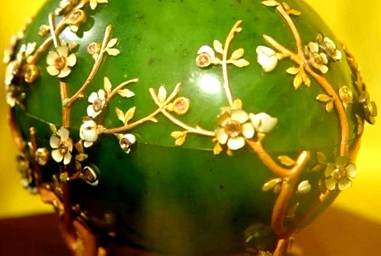
With no photos allowed and a relatively small collection, many visitors seem to find the Liechtenstein Treasure Chamber a bit of a let down. I didn’t find it that way though. While the room is small, it’s packed with unique treasures, including the Liechtenstein royal coronet, an ultra rare ‘Apple Blossom’ Fabergé Egg, and even a piece of moon rock from the Apollo 11 mission.
The 1901 Fabergé Apple Blossom Easter Egg is rumoured to be worth £30 million
For culture lovers, another must-see in Vaduz is the Kunstmuseum Liechtenstein, a contemporary art museum showcasing international and local talent in a striking, modern building. If you are not into modern art, however, it may not be for you. Even if you only get a stamp in your passport, Liechtenstein is worth a visit. Go explore and make memories!
When adventure calls
I have been lucky enough to have travelled to some of the most beautiful places on earth but there are still many places I'd like to see.