A long time ago, 1987 to be exact I had the good fortune to tag along with a travel agent who was checking out Cartagena for her agency in order to make suggestions to their customers on where to stay, what to see and do and rate some restaurants. Not a hard assignment really. We stayed at the Hotel Capilla del Mar which had opened only two years previous. I recently looked it up and the rates are still very reasonable (at least off season) and the reviews complimentary, especially regarding the breakfast buffet. Other things going for it are the proximity to the beach, the rooftop pool and the friendly staff; and though we took a cab from the airport at the time, they now offer a shuttle bus.
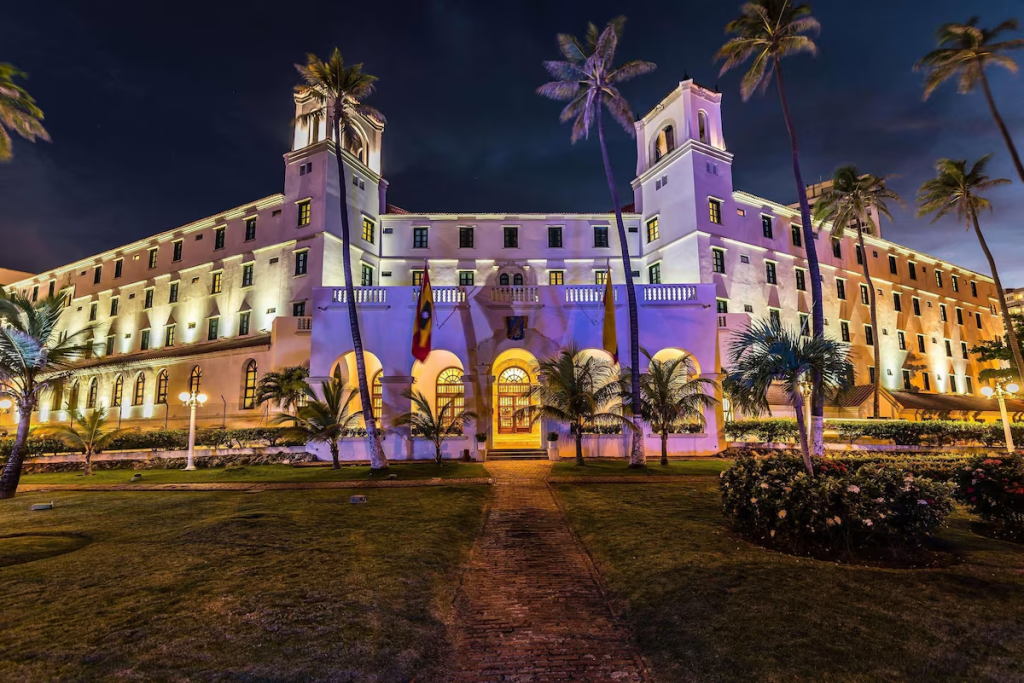
At that time the luxury hotel of choice which we walked to was located at the very end of the peninsula – the Hotel Caribe. As Cartagena’s historic premier property, it was the city’s original grand resort (built in 1945). Known for its beautiful neocolonial architecture, expansive tropical gardens, and prestige, it remained a legendary social hub and flagship for high-end travelers throughout the 1980s. We only had cocktails there as we were not members of the posh elite.
We did however, have a great time in Cartagena. Seeing what looked like 15 year old kids toting machine guns was a little off putting but I’m pretty sure things have changed since then. During the late 1980s and 1990s—the height of Colombia’s drug war and internal conflicts—visible military personnel carrying automatic weapons were a common security measure in major cities and tourist zones to deter cartels and insurgent groups. While you don’t have to worry about a war-zone atmosphere, modern safety concerns have shifted to opportunistic street crime. The biggest nuisances on the beaches today are incredibly aggressive street vendors, pickpockets, and overcharging scams.
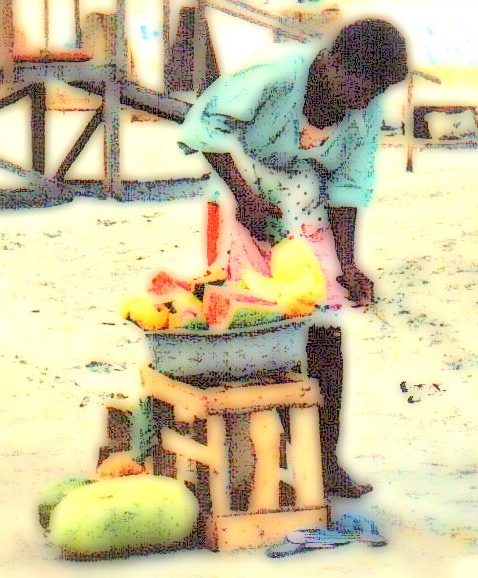
We body surfed in the ocean and sun bathed by the pool and bought fresh fruit when we needed a snack and walked for long distances on the beach, stopping every so often at a little pizzeria or patio for a refreshment and later on at night to listen to local musicians and RELAX.
Perched on the highest point in Cartagena, Convento de la Popa (The Convent of the Stern) is an absolute must-visit for the best panoramic views in the city. Built by Augustinian monks in the early 17th century, the convent gets its unique name because the hill it sits on resembles the stern (la popa) of a ship. Historically, it served a dual purpose: a sanctuary for faith and a strategic lookout point to spot approaching pirate ships.
Today, it offers a peaceful, historic escape from the bustling streets below. The convent features a stunning, Spanish-style interior cloister filled with bright, cascading flowers and beautiful colonial arches.
Travel Tip: Do not attempt to walk up the hill, as the path isn’t safe for pedestrians. Instead, take a licensed taxi or an organized tour right to the entrance at the top. It’s best visited in the morning or late afternoon to catch the golden light and avoid the midday heat!
Castillo San Felipe de Barajas is a formidable fortress dominating the Cartagena skyline, and is a designated UNESCO World Heritage site.
Located on the Hill of San Lázaro, it was strategically positioned to protect the city from landward attacks and to guard the vital entrance to the bay. Built in 1657 and expanded significantly in 1762, the fortress was virtually impregnable. The fort is designed so that if attackers managed to breach one section, the defenders could retreat to a higher point and fire down onto the captured area. Its geometric angles left absolutely no blind spots for approaching enemies.
One of the most fascinating features is the vast underground network of tunnels. At the very top of the fortress, a massive Colombian flag flies proudly, providing a great backdrop for photos. Just like La Popa, it offers incredible views of the city, but from a closer vantage point. You get an excellent look at the Old Town walls and the surrounding water.
Travel Tip: There is very little shade on the fortress, and the stone traps the heat, making it feel like an oven by midday. Visit early in the morning right when it opens, bring plenty of water, and wear a hat!
Just outside the Walled City, Getsemaní is the cultural heartbeat of Cartagena. Historically a working-class neighborhood settled by artisans and freed slaves, it has transformed into a vibrant hub of street art, music, and local life. Gathering on the walls to watch the sun sink into the Caribbean Sea is a daily ritual.
- What to do: Walk down the colorful, umbrella-lined Calle de las Sombrillas and check out the political and cultural murals.
- The Night Vibe: In the evening, head to Plaza de la Trinidad. Locals and tourists gather here to eat street food, drink cold Aguila beers, watch street performers, and listen to live music.
You cannot leave without eating local Caribbean food. La Cevicheria (made globally famous by Anthony Bourdain) is still a legendary spot for fresh, lime-cured seafood, though you should expect a wait!
Doris was widely considered the most traditional, upscale, and celebrated restaurant in Cartagena during the 1970s and 1980s (famous for its exquisite seafood and massive lobster festivals), it unfortunately has closed it’s doors but we had a splendid seafood dinner there. Unlike Doris, La Langosta Latina is still around, successfully serving seafood in Cartagena for nearly 40 years. Opened back in 1985, it is one of the city’s true legacy seafood establishments. It retains a very traditional, white-tablecloth, upscale Caribbean-classic atmosphere. Because it sits slightly outside the frantic main tourist grid of the Walled City, it usually offers a more relaxed, white-glove dining experience that recalls Cartagena’s golden era of dining.
Colombia produces anywhere from 70% to 90% of the world’s finest emeralds, Because Cartagena is a massive cruise ship and international tourist hub, it is flooded with high-priced tourist traps, aggressive commission-seeking tour guides, and outright street scams. Always buy at a reputable shop and ask for a certified authenticity Guarantee. Never buy on the Street as they are almost universally fake. Don’t take recommendations from tour guides, taxi drivers, and in some cases hotel concierge as their will be 10 -30 % kickback commissions added directly to the price tag. Walk in on your own. You can get a lovely stone at a decent price if you know what you are doing.
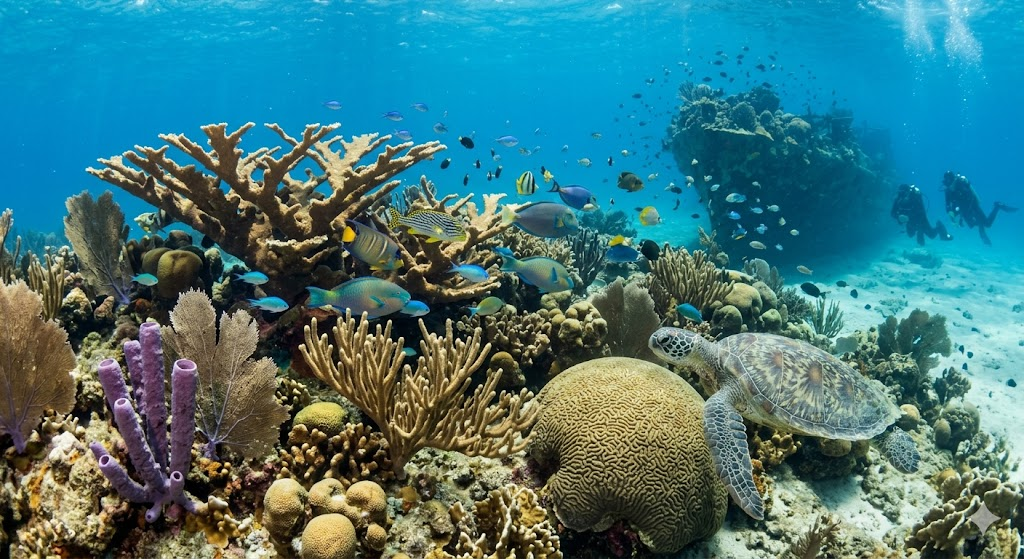
Now the main reason I wanted to tag along besides the fact that my room was paid for was that I would be able to go scuba diving in just a bathing suit in temperate 82 – 84 degree water and see colorful coral life and dense schools of colorful reef fish: blue tangs, parrotfish, triggerfish, angelfish, and macro life like seahorses and arrow crabs; instead of a rubber suit dive in the usual weeds and old truck tires of cold, murky Canadian lakes. You don’t always have to go all the way to the islands. There are some fascinating spots closer to the city lines, including a collection of about seven intentionally sunken barges, ships, and even an airplane that create excellent wreck dives
That to me was the highlight of the trip, when you are swimming below the water and marvelling at all the activity, color and beauty of the ocean, it is like time stands still and another different world opens up. It was simply breathtaking and something I shall never forget. Image below is AI generated as I did not possess an underwater camera at the time