
Please say you will!

Please say you will!
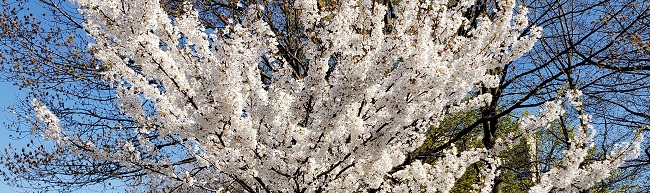
Cherry blossom – or sakura – season in Tokyo, Japan is truly a magical experience. Thousands of trees burst into bloom, dousing the streets with stunning shades of pink. The flowers are a national obsession and people flock to parks to hold hanami (picnic) parties. Often featuring food, drinks, and social gatherings, these parties take place in parks and gardens to celebrate the short-lived, beautiful blossoms.
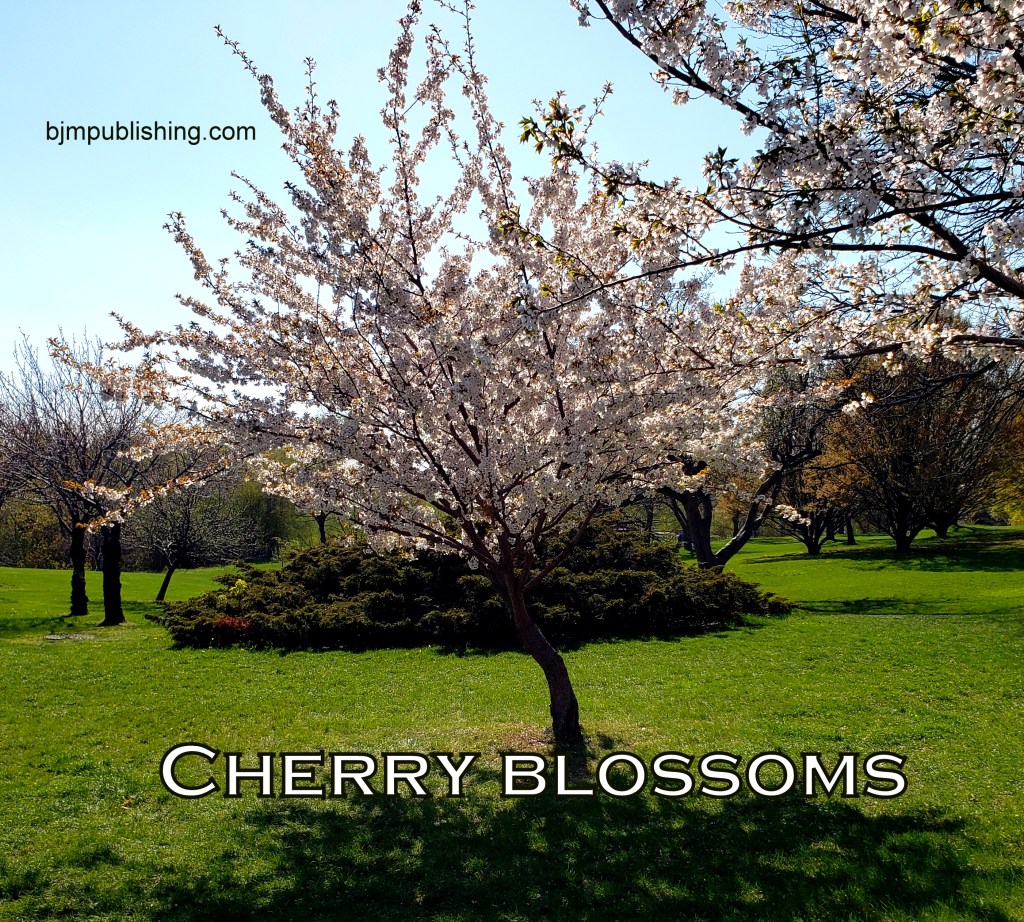
Vancouver is arguably the cherry blossom capital of Canada, home to more than 40,000 cherry trees planted across the city beginning to blossom early March to May. In 1925, the mayors of Kobe and Yokohama presented the Vancouver Park Board with five hundred trees of the Ojochin variety for planting at the cenotaph in Stanley Park, in honour of Japanese Canadian veterans of WWI.
In 1958, three hundred more cherry trees were donated by the Japanese consul as a symbol of friendship between Canada and Japan. These trees were soon planted along Cambie Boulevard, between 49th and 33rd Avenues, in Queen Elizabeth Park, and around the cenotaph in Stanley Park. 2025 marked a century since the historic introduction of the Ojochin tree to Vancouver. Over the past hundred years, cherry trees have enticed and enamoured locals and visitors alike; their significance to the city’s arboricultural, cultural, and social landscapes is abundant. Queen Elizabeth Park would be the best place to see the blossoms if you are restricted on time visiting Vancouver.
Generally, late April to early May is the best time to see these blossoms in Ontario. As they only blossom for a week or two at best, it would be wise to check online when optimum dates would be. Places to visit in Toronto include High Park which has approximately 2,000 trees and is extremely popular so walking, cycling or using the subway is highly recommended.
With almost 500 trees, Centennial Park in Etobicoke is home to the second-largest cherry blossom tree collection in Ontario.
Named in honour of Kariya, Mississauga’s sister city in central Japan, Kariya Park is a serene Japanese-inspired garden featuring a pond, boardwalk, pavilion and a beautiful grove of over 300 cherry blossom trees.
Trinity Bellwoods Park (Toronto): Features roughly 70 Sakura trees with iconic views of the CN Tower.
Exhibition Place (Toronto): A quieter spot with a significant canopy of cherry trees near the Princes’ Gate and Princess Margaret Fountain.
University of Toronto (St. George & Scarborough): Several, including a large cluster on Arboretum Lane at the Keele campus and near Robarts Library.
Outside of Toronto is the Royal Botanical Gardens in Burlington/Hamilton area which features a large collection of tress located south of the lilac dell and the Niagara Parks Botanical Gardens in Niagara Falls where cherry trees bloom in mid to late May near the entrance. Shakespearean Gardens in Stratford, Spencer Smith Park in Burlington are other spots.
Top contender in the U.S.A. is The International Cherry Blossom Festival is held in Macon, Georgia, every spring. Macon, known as the “Cherry Blossom Capital of the World,” has around 300,000–350,000 Yoshino Cherry Trees that bloom around the city in late March every year.

Grimsby, Ontario, is a town located on the southern shore of Lake Ontario. It serves as the westernmost municipality of Niagara, situated west of Hamilton and east of St. Catharines. Bordered to the south by the Niagara Escarpment and known as the “gateway to Niagara” it is roughly 25-30 km east of Hamilton, and about 80-90 km southwest of Toronto and accessible from the QEW.
In this picturesque town is a neighbourhood of unique and quite extraordinary houses that will pull at the Alice in Wonderland child inside you. As people do live here; if you visit, you should be respectful of their properties and not trespass unless invited in.


“Collectively known as the Painted Ladies” – An amazing collection of a couple dozen century cottages. Each has it’s own unique, whimsical painting scheme. Today, most of the cottages have been renovated and have become year-round houses. They are colorfully painted in shades of yellow, blue, pink, purple, and green and meticulously maintained by their owner occupants. If you are in the area, you should definitely stop and take a walk around, maybe dip your toes in the historical beach a few streets away.
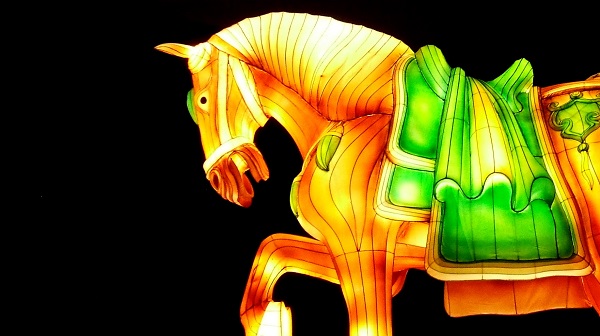
The Chinese New Year is being celebrated around the world in different venues and Cities to honour the Year of the Horse, particularly the Fire Horse for 2026. Celebrations started on February 17 and will conclude on Wednesday, March 03rd.
The Year of the Fire Horse is special because it occurs only once every 60 years, representing a rare convergence of the Horse zodiac sign and the fire element. This pairing creates a high-energy, volatile year known for rapid, intense, and often chaotic change, fueling both massive ambition and potential instability. Seems to be on point so far!


Typically, men get old, they retire and they spend the rest of their lives golfing, fishing, hiking. etc. or sitting in a rocker on a porch watching the world go by.
My brother, although he does golf, does not sit around much. His wife sees to that! He has however always been involved in hockey; most Canadians have tried the sport at one time or another. He has played in leagues for decades and just recently was inducted into the 80+ hockey hall of fame.
The 80+ Hockey Hall of Fame is a non-profit organization which nationally recognizes active recreational players 80 years of age and over. You can get more details at http://www.hockey80plus.com

I just wanted to give a shout out to him because I think it is quite an accomplishment, he may not have the speed he once had but I know he enjoys the camaraderie and social aspects of the game. The games are non-contact so not so rough, but the prowess and stick handling is still there. Congratulations old man!

The essence of Life and the oldest health and beauty secret in the world
What do all the following have in common?
Sports, filtration plants, hydro-electricity, bathing, salt, streams, glaciers, beer, ice, fishing, boating, rinks, steam rooms, pools, rain, puddles, lakes and oceans, irrigation, mud, etc. etc.
Just as we need to be able to breathe to survive; we need water! This elixir of good health is our body’s most important nutrient. We could live for weeks without food but only four or five days without water. Water is involved in every bodily process, carrying nutrients, flushing out waste, and keeping body temperature on an even keel. Drinking the right amount of water is also essential for healthy-looking skin, as it prevents it from drying out. And best of all, water doesn’t have a single calorie!
Whether it bubbles up from the earth, trickles down a mountainside, or gushes from a tap, water is preventative medicine, the major treatment for colds and sore throats, and an analgesic. Internally and externally, hot and cold – even icy; water is healthy stuff.
Spanish conquistador Juan Ponce de Leon is renowned for his purported pursuit of the fountain of youth which many thought a magical water source supposedly capable of reversing the aging process and curing sickness. Tales of sacred, restorative waters existed well before his birth however. Personally, I am not particularly looking for the fountain of youth but rather the secret of turning water into wine!
Relax in the calm blue Caribbean without ever leaving home. The sea offers health and beauty benefits: Saltwater causes the lymph glands to excrete toxins, cleansing the skin, and seaweed is a natural defoliant, smoothing away any roughness.
To simulate this in your bath, combine 1/4 cup each sea salt, dried seaweed (available in Asian markets), Epsom salts and baking soda, and pour into a clean dry container. Makes enough for four baths. Simply pour 1/4 cup of the mixture into the tub as the water is running. 20 minutes is the ideal soaking time – any longer will dry your skin.


When travelling from country to country and exploring new Cities, new cultures, gardens, museums and hiking up hills, it is always great to find along the way somewhere that you can sit and contemplate the moment, or give your feet a well deserved rest; and plan on what you will do next, or to simply watch the people coming and going around you. As the Band used to say “Take the Load off Fanny or was that Annie?”


The Terry Fox Run takes place September 20, 2026 and has been run by the Terry Fox Foundation continuously from 1981. For those who may not have heard of this amazing man I will give you a little background. He went to the Doctor because he had a pain in his knee when he was 18 years old studying for a degree in kinesiology. He was diagnosed with Osteogenic sarcoma, a type of bone cancer and had to have his leg amputated from the knee down. It was while he was in the hospital with other young cancer patients that he decided to run across Canada (using a prosthetic leg) to raise funds for cancer research. Running across Canada is not something you take likely.

Terry Fox planned to run approximately 8,000 kilometres (roughly 5,000 miles) across Canada, from St. John’s, Newfoundland, to Vancouver Island, British Columbia. His 1980 Marathon of Hope aimed to raise funds for cancer research, with a target of $1 for every Canadian citizen.
He ran a full marathon (roughly 42 km or 26 miles) every day. EVERY DAY! No matter what the weather. I was working as a bartender at the Richmond Inn when he came through Richmond Hill and went out to watch him go by. I don’t think I realized just what his destiny would be but he was definitely a hero. By the time he hit Thunder Bay he had covered 5,373 kilometres (3,339 miles) over 143 days.
Unfortunately his cancer returned and he had to quit his marathon in September, 1980 and died at just 22 on June 28th, 1981. Terry Fox was invested as the youngest-ever Companion of the Order of Canada on September 19, 1980, in a special ceremony in his hometown of Port Coquitlam, British Columbia. He is and always will be a symbol of hope for those who are touched by cancer.

